
The Rema (Toras HaOlah 1:15) compares the Menorah of the Beis HaMikdash to a microcosm of the cosmos. He states that the seven branches were symbolic of the seven "stars" that are known to move independant of the regular stellar motions. These "stars" are the sun, moon and the five planets that can be seen by the naked eye (Mercury, Venus, Mars, Jupiter and Saturn).
The comparison does not end there. The Menorah was lit in two stages, first five candles were lit prior to the afternoon sacrifice, and the latter two afterwards. This, says the Rema, demonstrates that the sun and moon, which appear significantly larger than the other five (they look like stars), are different. The fact that they are all lit from the western light also indicates that all these other bodies only reflect the light of the biggest of these, the sun.
There were eleven circular knobs on the Menorah and they represent the eleven spaces in between the twelve mazalos. They are round to demonstrate that the mazalos circle around through the year and, even though we discuss them as starting with T'leh/Nisan and ending with Dagim/Adar, they really have no beginning or end. There are twenty-two cups showing the twenty-two elements of which the universe can be subdivided; water, wind, fire, the twelve mazalos and the seven "stars" mentioned above. The nine flowers that adorned the Menorah were symbolic of the nine spheres that the Greeks perceived to surround the earth. These spheres were perceived to be in motion and through them the objects orbited the earth.
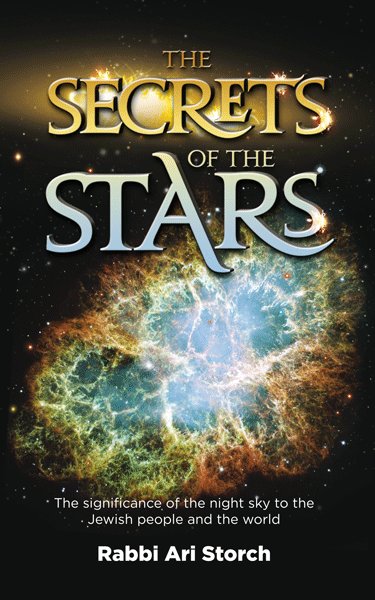
B"H, as I have mentioned in previous posts, it seems that my new book, The Secrets of the Stars, is in bookstores across the US. If anyone will be in the Skokie/Chicago area, I will be speaking there this coming Shabbos and Sunday!

Subscribe to:
Post Comments (Atom)
1 comment:
Thannk you
Post a Comment