Tuesday, February 23, 2010

Esther's Astronomical Identity Crisis

Various Midrashic and rabbinic sources compare Queen Esther to astronomical objects or phenomena. One of the interesting things about this is that there are several different possibilities suggested. It seems so peculiar that all these sources agree that Esther represents, or is associated, with a stellar object, but they do not seem to agree as to what that is.

The Gemara (Megillah 13a) mentions that the name Esther comes from Istahara (אסתהרא) which Rashi interprets to refer to the moon.

Targum Sheini (Esther 2:7), on the other hand, says that it is referring to the Greek word that refers to Venus.

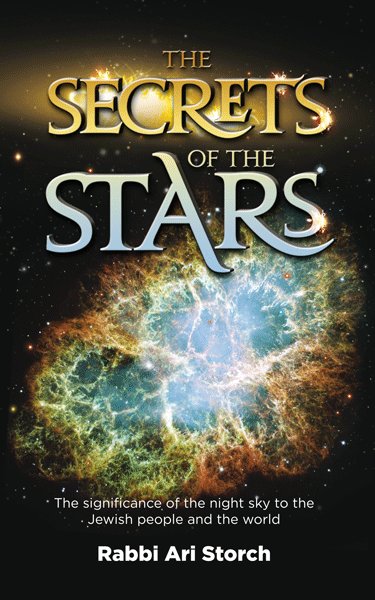
Rashi (Yoma 29b), based on the Gemara, also associates Esther with a phenomenon referred to as Ayeles HaShachar. Parenthetically, the Passhegen HaKesav (Hebrew translation and elucidation of the Targum Sheini), on the earlier verse from Esther (as well as other achronim) maintains that Venus is what Chazal refer to as Ayeles HaShachar. Interestingly, the Yerushalmi (Berachos 4b) emphatically states that Ayeles HaShachar is not Venus. The Alei Yonah maintains that this is something called zodiacal light although his suggestion seems unlikely as the Yerushalmi describes its sighting prior to dawn around the vernal equinox and zodiacal light is not visible then. (Shameless plug: Please keep your eyes open for my, as of now unnamed, book about the astronomical references in the Torah coming out within the year IY"H. Ayeles HaShachar, as well as many other topics, will be discussed.)

Another interesting point, although I have not seen anyone make this connection outright, is the similarity between Esther and the name Istahara (איסטהרא). Although the English transliteration of this name is identical to the earlier Gemara's word used for the moon, one can see from the Hebrew spelling that it is a different name. The Yalkut Shimoni (Bereishis 366) tells of a story in which a young woman of this name maintained her purity and was not seduced by evil angels that had descended to earth and were seeking relationships with mortal women. To honor her fortitude and piety she was placed as a star in the heavens in the star cluster called the Pleiades (found in the constellation Taurus, see last week's post).

Regardless of her cosmic nature, I would like to wish everyone a Happy Purim that is truly out of this world.

Wednesday, February 17, 2010

Invisible Signs From Heaven?

The Gemara teaches that the end of the planting season is when the Pleiades, a star cluster located in the constellation Taurus and referred to as Kimah by Chazal, is at its peak at approximately 3pm. 3pm is chosen as the time because this is when the field workers pack up for the evening and begin to go home. (Bava Metziya 106b; based on Rashi's commentary) This is defined as being in the beginning of Adar by Rashi. A basic question one can ask is, "Is the Gemara alluding to something else by giving this obscure description as opposed to just saying that the end of the season is at the beginning of Adar?"

Also, prior to offering a different explanation to this passage, Tosefos ask many questions on this approach. One of the questions is that at 3pm the stars are not visible (it is the middle of the day) and the Tosefos assume that the passage was giving a sign that is noticeable. Why would the Gemara describe the season's end with something that is not visible?

To give a possible answer to these questions, let us analyze some other important ideas that are associated with Adar. Moshe Rabbeinu was born on 7 Adar. The Seder HaDoros informs us that he was born at approximately 9am in the morning. The question is, is there any significance to 9am on 7 Adar?

There are a few places in the sky that are considered to influence events on earth. Whatever celestial item is rising from the east is considered to be exerting influence as it can be seen as rising to power (see Rosh Hashana 11b and Ibn Ezra's Sefer HaTa'amim). Its peak, when it has risen to the highest point it attains, is seen as its influence shining with the most possible strength.

The Pleaides are associated with rain (Berachos 58b) and they are assumed to have benevolent associations (see Yalkut Shimoni Bereishis 366). At the end of the planting season, it is the rains that the farmer is focused on. While they have hopefully started before Adar (see first chapter of Taanis), the farmer may have still been more focused on planting until this time when there is no more planting to be done. The rains associated with Pleiades are therefore seen as the tool for growth.

Moshe Rabbeinu, the vehicle through which Klal Yisrael was able to grow through the Exodus and receiving of the Torah, was born at the moment when Pleiades was rising. 7 Adar at 9am corresponds to a moment when this cluster will be positioned on the eastern horizon. 9am (really a quarter of the day since we are talking about shaos zemaniyos) is also the time when one can no longer recite Shema and fulfill his daily obligation. This is because people are considered to have risen and started their day at this point in time.

In other words, Moshe Rabbeinu's birth marked a time that was strongly associated with the time for the growth to begin. It was the hour of the day associated with getting started after slumber and it is marked by the Pleiades, the stars of growth, starting their influence in the world as they rise from the east. The end of Moshe Rabbeinu's birthday, meaning when people are finished being productive at 3pm, would be marked with Pleiades being at their peak. Almost as if to show that the entire day of Moshe Rabbeinu's birth marks the rise and complete exertion of power of growth by the Pleiades. This was a display that Klal Yisrael were about to grow through its newly born leader.

Why would a sign be given that is not noticeable? It is well known that the Purim miracle happened without supernatural events. It demonstrated Hashem's complete control while still utilizing the forces of nature. This is often expressed through the mazal of the month of Purim, Dagim or Pisces, which is depicted as fish which are famous for being hidden from sight as they live beneath the water. Moshe Rabbeinu's birth marked the beginning of the growth of Klal Yisrael, but they were not at a point where the overt miracles were going to be expressed. They were in a time period still able to be expressed as an "Adar" type time. It would another 80 until Moshe Rabbeinu would lead them out of Egypt.

Perhaps, this is why the Gemara expresses the end of the planting season with unnoticeable stars, as well. The beginnings of growth are usually not seen, they are taken for granted and not perceived until the product is developed. It is similar to the stars hidden by the sunlight that are taken for granted. Most people are not paying attention to them since they are not able to be seen, but they are still there"behind the scenes." The end of the planting season is marked by an astronomical event that is known to be happening, but impossible (at least in earlier times) to see directly.

Monday, February 8, 2010

New Rules of Physics or Translating Chumash?

In the end of this week’s parsha the shalosh regalim are mentioned. The same general language to refer to them is repeated again towards the end of Ki Sisa in a few weeks. There are, however, a few discrepencies that can be seen. What especially arouses one’s curiosity is when there are parallel pesukim that have one word that is different. Even more interesting is when the commentaries seem to disregard the discrepency!

One such difference is the way the Torah refers to the end of the year when discussing Sukkos. In Mishpatim the Torah says that Sukkos is, “בצאת השנה,” meaning in the end of the year. (Shemos 23:16) Whereas, in Ki Sisa the end of the year is referenced as “תקופת השנה.” (Shemos 34:22) Onkelos seems to disregard the difference in the wording and states that the translation is the same for both phrases.

I have heard a couple respectable individuals attribute a theory to the Vilna Gaon, but neither have been able to show me the actual source (although they claim that they remember seeing it in a reputable printed work, they just can’t remember where). Allegedly, the Gaon contended that there was initially supposed to be a seven month year just like we have seven days of the week. It was only after the effects of sin became pronounced that the world needed the extra months.

The theory maintains that there was never supposed to be a time period of winter. Winter is the time devoid of growth and symbolic of death. This should not occur in a pristine world (those of us in Baltimore are wishing for this other style world now as we dig out of approximately 2 1/2 feet of snow).

In Mishpatim the language is much stronger and literally means the end of the year. This is because this parsha precedes the sin of the Egel HaZahav and is stated in a perfected world where Sukkos is the actual end of the year. Ki Sisa has a wording that implies the end of the year but literally means “when the year circles around (see Rashi).” The implications are that the agricultural year is over and is cycling to the next spring even though there will be several barren months of winter. This is because Ki Sisa had the Egel HaZahav recounted in the earlier section of it and this part is, therefore, talking to the world of sinners.

One should not ask from the story of Noach where Hashem promises that all the seasons will continue (Bereishis 8:22), because that was stated to a world of sinners and the (alleged) Gaon could contend that the world was reperfected only at Matan Torah. Although one could, perhaps, ask from the Baraisa D’Mazalos that contends that Hashem initially placed twelve zodiacal constellations in the sky. There are twelve because the sky is divided into twelve regions, one for each month.

The only resolution is that each mazal would be for a shorter time than a month and the world’s orbit was faster in order to circle through these twelve constellations in a shorter time frame. The truth is that one would have to contend something along these lines because the entire concept is suggesting that earth orbited the sun quicker.

The issue is that earth would not be able to sustain life at an orbit much farther or closer from the sun so it would have had to be orbiting the sun faster while keeping the same current distance. How this world went so fast and kept its current orbit up to a point in time when it slowed so drastically would require a new and extremely complex set of laws of physics (assuming that it did not all happen within the supernatural realm completely). The earth's initial speed should have been too fast to be caught in orbit at this distance around the sun and it should have been flung into the far realms of the solar system. The earth's change in speed when it slowed, on the other hand, should have thrust it into the sun!!!

The only accomodation would be to assume that the earth was more massive and then, at the time of the change, lost its mass, perhaps via a collision with a meteor that broke off a large chunk of earth. The new smaller earth would be able to maintain the proper distance without changing its orbit. This is also difficult because the impact itself should have thrown earth off course and certainly would have left a massive crater somewhere on the planet.

Tuesday, February 2, 2010

The Universally Cosmic Ten Commandments

The ancients used to express the visible cosmos as several concentric spheres that rotate around the earth. From our perspective, different objects appear to go around the earth at different speeds. Therefore, one could express that the cycle of the sun is one day. That of the moon could be expressed as a month and so on and so on. Each object, or objects, that had a perceived motion was considered to be on its own sphere (or orbit) and this was used to describe its motion. Nine such spheres are mentioned and they are: that of the sun, the moon, Mercury, Venus, Mars, Jupiter, Saturn, the regular stars and the last one was a wheel that turned in order to provide the motion for the lower spheres.

The Ibn Ezra (Shemos 20:14) utilizes this description of the visible universe to express how the Aseres HaDibros contain the elements of the entire universe as a whole. The first of these holy mitzvos is the belief that Hashem is God. The Ibn Ezra contends that this is the only one of these commandments that is not expressed in the spheres of the cosmos. This is very reasonable considering how Hashem is not part of this universe, rather, He is the One that created it.

The second commandment is the prohibition of believing in other gods. This corresponds to the outermost sphere. This is the sphere that rotates the lower spheres and, as such, is perceived to be influencing the entire cosmos. Therefore, this prohibition clearly states that we are not to believe that it is a force other than Hashem Himself that is controlling the universe.

The third commandment is not using Hashem's name for no reason. This, states the Ibn Ezra, corresponds to the next sphere, the one containing the fixed stars and all the constellations. Some of the most spectacular beauties of creation can be found in this area and, continues the Ibn Ezra, is where Hashem's glory can be perceived. This is similar to His Holy name. Many have contended that these stellar beauties serve no purpose and are useless in the creation, so the corresponding commandment tells us not to use the Holy Name for no reason.

The forth commandment is Shabbos and this corresponds to Saturn. Based on the order of astrology mentioned in the Gemara (see Shabbos 129b and Rashi), Shabbos day is influenced by Saturn. Saturn is one of the two worst astrological influences, the other being Mars. Friday night is considered to be influenced by Mars, and Shabbos is, therefore, considered to be the most perilous day of the week. Accordingly, contends the Ibn Ezra, one needs to refrain from mundane activities on this dangerous day and only focus on the service of Hashem. Shabbos is the way to do this.

The fifth commandment is honoring one's parents. The sphere this is reflecting is Jupiter's. The Ibn Ezra mentions that Jupiter is considered to be the most exalted of the astrological influences (its position in both Roman and Greek mythology reflect this) and it demonstrates the idea of honor. We must honor the appropriate people and we have this holy commandment.

The sixth is murder and is Mars' sphere. Mars is the astrological influence of war and blood and this is how it has been portrayed by the ancient civilizations (Greek and Roman mythology, once agin, reflect this).

The seventh is not having forbidden relationships and the sphere is that of Venus. Venus is the astrological force associated with these types of forbidden pleasures (the Greeks and Romans had this one too).

The eighth is the prohibition of stealing and corresponds to the sphere of sun. The sun was considered to overpower and take all that it wants, whether intended for it or a different entity. As such, we must learn to respect others' property and leave it in their possession.

The ninth is not testifying falsly and this is Mercury's sphere. Mercury was associated with talking.

The last is not coveting another's possessions and is the last sphere, the moon. The moon has always been associated with desire and this commandment makes us aware that we are to control our desires not just our actions.

Although we no longer utilize this method to describe the physics behind the movements in the universe, it still accurately depicts the perception of the universe from man's vantage point. The Aseres HaDibros, in this way, show that all of the universe is to be harnessed in the appropriate fashion in order to allow man to serve his Creator appropriately.