With Tisha B'Av approaching, I thought that the following was appropriate. On Tisha B'Av we mourn the tragic loss of both Batei Mikdash as well as many other tragedies that have marred our past. Both Batei Mikdash were destroyed in this month of Av.
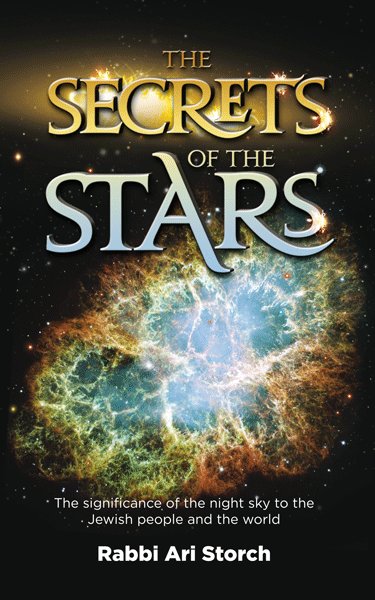
The Rema points out that the sign of Av is Leo, the Lion. This is a month when royalty should be able to shine. The Beis HaMikdash, Chazal mention, was designed in such a fashion as to give the appearance like a lion. It was broader in the front of the building than it was in the back. Additionally, the fire on the Mizbeach was initially shaped like a lion. That which it took the shape of a dog in the second Beis HaMikdash is also reminiscent of a lion, says the Rema. There are 12 main mazalos and 36 other constellations in the sky. Each of the twelve rules over 3 of the others. In Leo's domain is Canis Major which is depicted as a dog. Thus, Leo was represented on the Mizbeach in the second Beis HaMikdash, although a secondary figure was chosen to demonstrate that things were not the same as they had been in the first Beis HaMikdash.
Due to our sins the decree was sealed that royalty be taken from us and the Beis HaMikdash was destroyed. This happened in Av to demonstrate that the appearance of royalty was no longer being demonstrated by the Jews. Rather, Nevuchadnetzar, described both in Pesukim and by Chazal as a lion, came into the Mikdash, symbolized by the lion, and destroyed it in the month of the lion.
May we merit to witness the rebuilding of this holy temple very quickly!
Wednesday, August 3, 2011

Thursday, July 28, 2011
Martians and Levi'im
In an earlier post we discussed how the Levi'im represent the stars of the sky (see here). Interestingly enough, there are 48 cities that were given for the Levi'im to inheret in Eretz Yisrael as seen in this week's Parsha. There are also 48 ancient constellations that can be found in the sky.
Another interesting point is that there are 7 ancient "planets": the sun, moon, Mercury, Venus, Mars, Jupiter, and Saturn. The other planets are not visible to the naked eye. There are six distinct Levitic cities that are designated as cities of refuge for those who have killed accidentally. You may ask, if I am trying to connect the Levi'im with celestial objects wouldn't I want to find 7 cities and not 6? Rav Yehonasan Eibshitz points out that of the seven ancient planets one is considered to symbolize murder and blood, Mars. As such, it is often left out of certain pure and holy ceremonies that have the other planets present. The Levi'im were the protectors of those that had accidentally harmed. They were charged with providing for this individual with safety and security (see Sefer HaChinuch to this mitzvah). As such, Mars has no place being represented.
Now the connections are clearer. The 48 total cities are the 48 constellations. The 6 cities of refuge are 6 of the 7 planets, Mars was given the boot.
Another interesting point is that there are 7 ancient "planets": the sun, moon, Mercury, Venus, Mars, Jupiter, and Saturn. The other planets are not visible to the naked eye. There are six distinct Levitic cities that are designated as cities of refuge for those who have killed accidentally. You may ask, if I am trying to connect the Levi'im with celestial objects wouldn't I want to find 7 cities and not 6? Rav Yehonasan Eibshitz points out that of the seven ancient planets one is considered to symbolize murder and blood, Mars. As such, it is often left out of certain pure and holy ceremonies that have the other planets present. The Levi'im were the protectors of those that had accidentally harmed. They were charged with providing for this individual with safety and security (see Sefer HaChinuch to this mitzvah). As such, Mars has no place being represented.
Now the connections are clearer. The 48 total cities are the 48 constellations. The 6 cities of refuge are 6 of the 7 planets, Mars was given the boot.
Friday, July 22, 2011
The least frequent הפטרות
We just read the הפטרה of פרשת פינחס which is a pretty rare occurrence. However, it is not the most rare. The exact frequencies of each rare הפטרה are discussed here. The numbers are based on a chart of the frequency of each type of year found here.
However, there is one issue with the calculations. It assumes that whenever אחרי מות and קדושים are separate and קדושים is not a special פרשה, its הפטרה is read. However, as pointed out in R' Dovid Heber's שערי זמנים, this is not the custom, according to משנה ברורה. Rather, as long as the הפטרה of אחרי מות was not read for whatever reason, we read that in place of הפטרת קדושים. Therefore, the הפטרה of קדושים is only read when both אחרי מות and קדושים are not special פרשיות, thereby dropping the frequency under 6%! For more thorough details please see this excerpt from the ספר.
Wednesday, July 20, 2011
Scrambled Eggs
As we fasted 17 Tammuz yet again, we have begun the mourning period known as "Bein Hametzarim" or "The Three Weeks." During this time it is customary for many to display signs of mourning and to reflect on the destruction of the Batei Mikdash. As the weeks progress the intensity of the mourning increases with the 9 days starting a much more severe expression of it. The week of Tisha B'Av is even more of a pronounced mourning time and Tisha B'Av itself is the ultimate display of public mourning.
The Gemara in Bechoros (8b) discusses the debate that Rebbi Yehoshua ben Chananya had with the elders of Athens. The questions and answers posed from one to the other were in the form of riddles and part of the challenge was to understand what was being asked. At one point the elders of Athens brought two eggs before Rebbi Yehoshua and demanded that he tell them which had been laid by a black (dark feathered) chicken and which was laid by a white chicken.
The Maharsha explains that the elders were bothered with the concept of "The Three Weeks." The Gemara earlier had stated that the incubation period of chicken is three weeks. The elders saw that there were two segments of three weeks in the Jewish calendar in which the Jewish people can achieve atonement. One is the three weeks beginning with Rosh Hashana and going until Hoshana Rabbah. This was understood by them as providing atonement as people focus on repentance during this time. As such they saw this as the white egg which will produce a white chick that came from a white chicken. Since white is symbolic with purity they were comparing this time period to a white chicken and the egg is symbolic of that which is being produced during this time period, purity. They understood that a white chick, a completely pure person, can emerge from such a pure time period.
What they did not understand is how a black chicken can also have a white egg and a white chick come about. The Three Weeks are a time of mourning and destruction. It is a time of sadness and retribution for sin. They did not understand how this can produce a pure person. To this Rebbi Yehoshua ben Chananya showed them that Klal Yisrael gets cleansed in one of two ways. Either we repent and come close to Hashem, or through his punishments He directs us back to Him. Either way, the outcome can be a purified Klal Yisrael.
May we merit to the transformation of these days of mourning into days of joy!
The Gemara in Bechoros (8b) discusses the debate that Rebbi Yehoshua ben Chananya had with the elders of Athens. The questions and answers posed from one to the other were in the form of riddles and part of the challenge was to understand what was being asked. At one point the elders of Athens brought two eggs before Rebbi Yehoshua and demanded that he tell them which had been laid by a black (dark feathered) chicken and which was laid by a white chicken.
The Maharsha explains that the elders were bothered with the concept of "The Three Weeks." The Gemara earlier had stated that the incubation period of chicken is three weeks. The elders saw that there were two segments of three weeks in the Jewish calendar in which the Jewish people can achieve atonement. One is the three weeks beginning with Rosh Hashana and going until Hoshana Rabbah. This was understood by them as providing atonement as people focus on repentance during this time. As such they saw this as the white egg which will produce a white chick that came from a white chicken. Since white is symbolic with purity they were comparing this time period to a white chicken and the egg is symbolic of that which is being produced during this time period, purity. They understood that a white chick, a completely pure person, can emerge from such a pure time period.
What they did not understand is how a black chicken can also have a white egg and a white chick come about. The Three Weeks are a time of mourning and destruction. It is a time of sadness and retribution for sin. They did not understand how this can produce a pure person. To this Rebbi Yehoshua ben Chananya showed them that Klal Yisrael gets cleansed in one of two ways. Either we repent and come close to Hashem, or through his punishments He directs us back to Him. Either way, the outcome can be a purified Klal Yisrael.
May we merit to the transformation of these days of mourning into days of joy!
Monday, July 11, 2011
HAPPY BIRTHDAY!
This week marks a very special birthday! None other than planet Neptune. No, Neptune was not created on July 12, nor was that the date of its discovery, sort of. Every planet in our Solar System orbits the Sun. However, the time it takes for each planet to complete one full orbit is completely dependent on the distance between it and the Sun. Neptune is the farthest planet from the Sun (ever since they put Pluto in cherem) and this means that it has the longest orbit. It takes Neptune just under 165 (Earth) years for it to complete one of its own. Thus, in Neptunian years, this July 12 will mark the one year date since its discovery on September 23, 1846.
Although it may not seem controversial in today's day and age to suggest that the planets Uranus and Neptune exist, this was a fairly big point of contention in earlier years. Chazal and many of the Rishonim (as well as other ancient societies) refer to there being seven "planets" that influence this world: the Sun, Moon, Mercury, Venus, Mars, Jupiter and Saturn. These are all the common objects that have their own perceived motion relative to the stars and are visible to the naked eye. Many mystical concepts reference this system of seven (including the sefiros) and when Uranus was discovered in 1781 by Sir William Herschel people seriously began to have serious questions with regards to these earlier systems. If the Rishonim mention that these seven bodies influence the Earth in a metaphysical, what should one now think now that there are more of these planets involved. Does the system need to be completely reworked?
While some did not see abandoning this old system as problematic, others dedicated time and effort to show that the original system could incorporate these new concepts. Perhaps, the most famous is the Sefer HaBris from Vilna. He maintained that all the celestial objects are utilized by Hashem to shower His will upon our planet. However, some exert more influence than others. The seven visible planets exert the most force and were thus discussed directly by the earlier sources. The "invisible" ones were too distant and insignificant to affect this planet with any significance so they were not even discussed.
Although it may not seem controversial in today's day and age to suggest that the planets Uranus and Neptune exist, this was a fairly big point of contention in earlier years. Chazal and many of the Rishonim (as well as other ancient societies) refer to there being seven "planets" that influence this world: the Sun, Moon, Mercury, Venus, Mars, Jupiter and Saturn. These are all the common objects that have their own perceived motion relative to the stars and are visible to the naked eye. Many mystical concepts reference this system of seven (including the sefiros) and when Uranus was discovered in 1781 by Sir William Herschel people seriously began to have serious questions with regards to these earlier systems. If the Rishonim mention that these seven bodies influence the Earth in a metaphysical, what should one now think now that there are more of these planets involved. Does the system need to be completely reworked?
While some did not see abandoning this old system as problematic, others dedicated time and effort to show that the original system could incorporate these new concepts. Perhaps, the most famous is the Sefer HaBris from Vilna. He maintained that all the celestial objects are utilized by Hashem to shower His will upon our planet. However, some exert more influence than others. The seven visible planets exert the most force and were thus discussed directly by the earlier sources. The "invisible" ones were too distant and insignificant to affect this planet with any significance so they were not even discussed.
Tuesday, July 5, 2011
Did Bila'am Say Tachanun?
The pasuk relays Balak's disappointment in Bila'am when it states (Bamidbar 23:11)
"לקב איבי לקחתיך והנה ברכת ברך"
"I hired you to curse my enemies and behold you have blessed them."
The Chasam Sofer points out that in an average Jewish year there are 354 days. Of these there are 222 days that we say Tachanun and are considered to be somewhat days of judgment. Conversely, there are 132 days that we do not say Tachanun because they are days of joy. Bila'am was hired to make our entire year into days of judgment and leave us no happiness. The Gematria of לקב (to curse) from the earlier verse is 132 and ברך (bless) is 222. Bila'am blessed us with such a blessing that not only did our days of happiness not turn to judgment, but those of judgment turned to happiness.
"לקב איבי לקחתיך והנה ברכת ברך"
"I hired you to curse my enemies and behold you have blessed them."
The Chasam Sofer points out that in an average Jewish year there are 354 days. Of these there are 222 days that we say Tachanun and are considered to be somewhat days of judgment. Conversely, there are 132 days that we do not say Tachanun because they are days of joy. Bila'am was hired to make our entire year into days of judgment and leave us no happiness. The Gematria of לקב (to curse) from the earlier verse is 132 and ברך (bless) is 222. Bila'am blessed us with such a blessing that not only did our days of happiness not turn to judgment, but those of judgment turned to happiness.
Tuesday, June 28, 2011
Avodah Zarah in our Calendar?
This Shabbos will be 30 Sivan, the first day of Rosh Chodesh Tammuz. Even though the names of the months that we use are Babylonian in origin, Chazal still project deeper meaning and symblism into these words. (See Torah Sheleimah Miluim Bo p. 177) What is fascinating about Tammuz is that the drasha and the Babylonian meaning of the word are identical. Tammuz is the name of a pagan god. The first month of summer, Tammuz, was dedicated in his honor.
It pretty interesting to see how an abomination such as idol worship appears to plant roots in basic Jewish nomenclature. However, what is more interesting, perhaps, is how this relates to Parshas Chukas. The beginning of the Parsha discusses the concept of Parah Adumah, the Red Heifer. This service is performed in order to purify those that have come in contact with a corpse. It is comprised of a red heifer that is slaughtered and then incinerated to ash. The ashes are then mixed into a liquid mixture and sprinkled on the person needing purification. The process takes place outside the confines of the Beis HaMikdash.
The Ramban notes that this mysterious service appears somewhat pagan. The red color symbolizes doom and elements connected to Eisav and Mars. It was used by pagans to embody these unholy concepts. The necessity for the service to be performed outside the Holy Temple also give this unholy feeling.
It is therefore interesting to me to note that Chukas is ALWAYS read in Tammuz. This year is the closest thing to an exception that exists with it being read on the last day of Sivan, BUT that day is considered to be Rosh Chodesh Tammuz. Chukas will NEVER be read on a day of the year earlier than 30 Sivan and will NEVER be read in Av. Thus, we have the Parsha, whose mysterious reasoning gives the impression of idol worship and whose reasoning eludes us, being read in the month whose name connotes the same idea.
It pretty interesting to see how an abomination such as idol worship appears to plant roots in basic Jewish nomenclature. However, what is more interesting, perhaps, is how this relates to Parshas Chukas. The beginning of the Parsha discusses the concept of Parah Adumah, the Red Heifer. This service is performed in order to purify those that have come in contact with a corpse. It is comprised of a red heifer that is slaughtered and then incinerated to ash. The ashes are then mixed into a liquid mixture and sprinkled on the person needing purification. The process takes place outside the confines of the Beis HaMikdash.
The Ramban notes that this mysterious service appears somewhat pagan. The red color symbolizes doom and elements connected to Eisav and Mars. It was used by pagans to embody these unholy concepts. The necessity for the service to be performed outside the Holy Temple also give this unholy feeling.
It is therefore interesting to me to note that Chukas is ALWAYS read in Tammuz. This year is the closest thing to an exception that exists with it being read on the last day of Sivan, BUT that day is considered to be Rosh Chodesh Tammuz. Chukas will NEVER be read on a day of the year earlier than 30 Sivan and will NEVER be read in Av. Thus, we have the Parsha, whose mysterious reasoning gives the impression of idol worship and whose reasoning eludes us, being read in the month whose name connotes the same idea.
Subscribe to:
Posts (Atom)