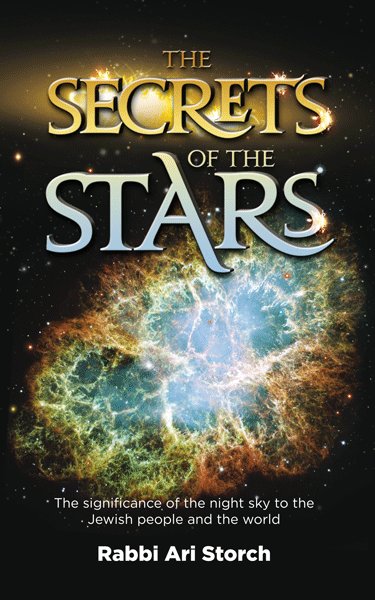
As mentioned last week, this week's Haftarah contains many words within a short section that also express astronomical/astrological terms. It seems more than just coincidence that this is occurring and, perhaps, is actually deliberate to provide imagery that enhances the meaning of the text. (Once again, I will use the translation from Artscroll's Tanach, but leave the word I am referring to in Hebrew.)
"Behold they will wear out like a garment; Ash (moth) will devour them." (Yeshaya 50:9) Ash is also the name of Ursa Major, the constellation that has the recognizable Big Dipper in it. In rabbinic literature it is also displayed as the constellation that the others appear to rotate around, thus, it appears that it is the center of the "wheels of the universe" and the point that seems to have all else move around it. This is significant since, to people in ancient times, this was symbolic of the item that appeared to keep the universe in balance and make sure that things continued properly. Here it could signify that through time and natural events the adversaries of Hashem will wither away and be forgotten.
"Though he may have walked in darkness with no Nogah light for himself, etc." (Ibid. 50:10) Nogah also refers to Venus and it is seen as the brightest of all stars. It rises often times just before dawn and is known as the Morning Star. As such, the one who fears Hashem, the subject in this verse, has walked without a guiding light, nor has he felt the dawn to his darkness was coming since he never witnessed a Morning Star.
"Behold all of you are igniters of fire, kindlers of Zikos (sparks), go in the flame of your fire, and in the Zikos (sparks) you have lit, etc." (Yeshaya 50:11) Zikos also can refer to either a comet or a shooting star. If it is intended to refer to shooting stars then it could mean that those who feared Hashem may have felt small and insignificant, but with their light they produced was brilliant. A shooting star is not actually a star, but a speck of dust that burns up as it enters the atmosphere. If it means a comet then just as a comet has its own orbit and seems to be a lonely celestial object, so too those that feared Hashem were small in comparison to those that did not. But they need to follow in the path they have blazed.
"Listen to me, O pursuers of Tzedek (righteousness), etc." (Yeshaya 51:1) Tzedek also means Jupiter. Jupiter is the largest of the planets and righteousness has been attributed to it historically by Chazal. As such, we refer to this planet as the object the other celestial objects were searching for.
Interestingly, the above verses are all one immediately after the other.
Tuesday, August 16, 2011

Wednesday, August 10, 2011
Heavenly Consolation
This week's Haftarah begins the seven of Haftaros of consolation. All can be found in Sefer Yeshaya and they are read between Tisha B'Av and Rosh Hashana as a way to reconnect and reestablish a loving relationship with Hashem. It has fascinated me that in the words of the Nevi'im one can sometimes see language that has a double meaning and could also be referring to the stars. While one could counter that some of this is coincidental, there is so much of this encrypted language, especially in Yeshaya, that it is hard to discount. This is especially since allusions to astronomical/astrological concepts and objects was something that was common back in those days.
This week's Haftarah is no exception (in fact, this week and next week seem to have more than the rest of these seven). The Pesukim state (translation from the Artscroll Tanach; I will transliterate the words that I am focusing on, though):
"[He is] like a shepherd who grazes his flock, who gathers the Tela'im (lambs) in his arm, etc." (Yeshaya 40:11) T'leh (pl. Tela'im) can also refer to Aries, the mazal of the month of Nissan which is the month which Hashem took his "sheep" to be His when He redeemed them from Egypt at the time of the Exodus.
"Who measured the waters in His palm, gauged the Heavens with a span, measured in a huge vessel the dust of the earth, and weighed mountains with a scale and hills with a Moznayim (balance)." (Yeshaya 40:12) Moznayim is the mazal of the month of Tishrei and connotes the judgment that is enacted by Hashem at that time.The scrutiny of this judgment exacted at all of the universe from the greatest to the smallest of Creation is His judgment and that concept seems consistent with the theme of this verse.
"Behold, all the nations are like a drop from a D'li (bucket) and are reckoned like the dust rubbing of a Moznayim (balance), etc." (Yeshaya 40:15) The Ibn Ezra teaches that D'li which is the mazal for the month of Shvat, is also the mazal that symbolizes Klal Yisrael. As such, it is befitting to mention that the other nations are like but a drop from this "bucket" and that they will be rendered like dust from Moznayim which as stated before is a display of Hashem's judgment. Meaning all the nations that did harm to us throughout the exile will be brought to justice.
Next week's Haftarah has a lot more than just these. Hopefully I will get a chance to post them for then.
Tuesday, August 9, 2011
Dog Days of Summer
With summer in full force and Tisha B'Av having just passed, I was reminded of a post from last year about Tisha B'Av that got me thinking. Last year I focused on the fact that many translations of Kinos seem to mistranslate a line from Kinah 37. The Kinah mentions how Orion seems to only rise in the month of Tammuz from Eretz Yisrael's vantage point. Click here for an depth discussion as to what the correct translation is and why the more common Kinos seem to have not translated this phrase properly.
I started thinking how last year I was so focused on the technical translation that for some reason I did not pay that much attention as to why this fact might be pertinent. Who really cares about Orion's rising? Why is it important that it is during Tammuz?
After thinking about this for a few minutes I thought that perhaps the author was portraying the fact that Orion (also known as Kesil, "The Fool") only has gained power in the beginning of the summer. The invading armies were succesful at breaching the walls of Yerushalayim in Tammuz, just like Orion seems to come to strength in this month. Recently I posted some of the Rema's statements that discuss how the constellation Leo (the lion of the month of Av) was displayed in the Beis HaMikdash and how it was replaced with Canis Major (Orion's hunting dog in the sky). It seems that Av can be either displayed as Leo, the Lion of royalty, or as the dog of the fool, Orion. See here.
Perhaps, the Kinah is teaching us that we must choose whether we want to act like royalty or like a fool. Interestingly, in the Kinah that precedes this one a mention of how the dogs dragged away the youth compared to lions can be found.
Wednesday, August 3, 2011
Leo and Av
With Tisha B'Av approaching, I thought that the following was appropriate. On Tisha B'Av we mourn the tragic loss of both Batei Mikdash as well as many other tragedies that have marred our past. Both Batei Mikdash were destroyed in this month of Av.
The Rema points out that the sign of Av is Leo, the Lion. This is a month when royalty should be able to shine. The Beis HaMikdash, Chazal mention, was designed in such a fashion as to give the appearance like a lion. It was broader in the front of the building than it was in the back. Additionally, the fire on the Mizbeach was initially shaped like a lion. That which it took the shape of a dog in the second Beis HaMikdash is also reminiscent of a lion, says the Rema. There are 12 main mazalos and 36 other constellations in the sky. Each of the twelve rules over 3 of the others. In Leo's domain is Canis Major which is depicted as a dog. Thus, Leo was represented on the Mizbeach in the second Beis HaMikdash, although a secondary figure was chosen to demonstrate that things were not the same as they had been in the first Beis HaMikdash.
Due to our sins the decree was sealed that royalty be taken from us and the Beis HaMikdash was destroyed. This happened in Av to demonstrate that the appearance of royalty was no longer being demonstrated by the Jews. Rather, Nevuchadnetzar, described both in Pesukim and by Chazal as a lion, came into the Mikdash, symbolized by the lion, and destroyed it in the month of the lion.
May we merit to witness the rebuilding of this holy temple very quickly!
Thursday, July 28, 2011
Martians and Levi'im
In an earlier post we discussed how the Levi'im represent the stars of the sky (see here). Interestingly enough, there are 48 cities that were given for the Levi'im to inheret in Eretz Yisrael as seen in this week's Parsha. There are also 48 ancient constellations that can be found in the sky.
Another interesting point is that there are 7 ancient "planets": the sun, moon, Mercury, Venus, Mars, Jupiter, and Saturn. The other planets are not visible to the naked eye. There are six distinct Levitic cities that are designated as cities of refuge for those who have killed accidentally. You may ask, if I am trying to connect the Levi'im with celestial objects wouldn't I want to find 7 cities and not 6? Rav Yehonasan Eibshitz points out that of the seven ancient planets one is considered to symbolize murder and blood, Mars. As such, it is often left out of certain pure and holy ceremonies that have the other planets present. The Levi'im were the protectors of those that had accidentally harmed. They were charged with providing for this individual with safety and security (see Sefer HaChinuch to this mitzvah). As such, Mars has no place being represented.
Now the connections are clearer. The 48 total cities are the 48 constellations. The 6 cities of refuge are 6 of the 7 planets, Mars was given the boot.
Friday, July 22, 2011
The least frequent הפטרות
We just read the הפטרה of פרשת פינחס which is a pretty rare occurrence. However, it is not the most rare. The exact frequencies of each rare הפטרה are discussed here. The numbers are based on a chart of the frequency of each type of year found here.
However, there is one issue with the calculations. It assumes that whenever אחרי מות and קדושים are separate and קדושים is not a special פרשה, its הפטרה is read. However, as pointed out in R' Dovid Heber's שערי זמנים, this is not the custom, according to משנה ברורה. Rather, as long as the הפטרה of אחרי מות was not read for whatever reason, we read that in place of הפטרת קדושים. Therefore, the הפטרה of קדושים is only read when both אחרי מות and קדושים are not special פרשיות, thereby dropping the frequency under 6%! For more thorough details please see this excerpt from the ספר.
Wednesday, July 20, 2011
Scrambled Eggs
As we fasted 17 Tammuz yet again, we have begun the mourning period known as "Bein Hametzarim" or "The Three Weeks." During this time it is customary for many to display signs of mourning and to reflect on the destruction of the Batei Mikdash. As the weeks progress the intensity of the mourning increases with the 9 days starting a much more severe expression of it. The week of Tisha B'Av is even more of a pronounced mourning time and Tisha B'Av itself is the ultimate display of public mourning.
The Gemara in Bechoros (8b) discusses the debate that Rebbi Yehoshua ben Chananya had with the elders of Athens. The questions and answers posed from one to the other were in the form of riddles and part of the challenge was to understand what was being asked. At one point the elders of Athens brought two eggs before Rebbi Yehoshua and demanded that he tell them which had been laid by a black (dark feathered) chicken and which was laid by a white chicken.
The Maharsha explains that the elders were bothered with the concept of "The Three Weeks." The Gemara earlier had stated that the incubation period of chicken is three weeks. The elders saw that there were two segments of three weeks in the Jewish calendar in which the Jewish people can achieve atonement. One is the three weeks beginning with Rosh Hashana and going until Hoshana Rabbah. This was understood by them as providing atonement as people focus on repentance during this time. As such they saw this as the white egg which will produce a white chick that came from a white chicken. Since white is symbolic with purity they were comparing this time period to a white chicken and the egg is symbolic of that which is being produced during this time period, purity. They understood that a white chick, a completely pure person, can emerge from such a pure time period.
What they did not understand is how a black chicken can also have a white egg and a white chick come about. The Three Weeks are a time of mourning and destruction. It is a time of sadness and retribution for sin. They did not understand how this can produce a pure person. To this Rebbi Yehoshua ben Chananya showed them that Klal Yisrael gets cleansed in one of two ways. Either we repent and come close to Hashem, or through his punishments He directs us back to Him. Either way, the outcome can be a purified Klal Yisrael.
May we merit to the transformation of these days of mourning into days of joy!
Subscribe to:
Posts (Atom)