Recently, important results were released from one of the foremost laboratories in the world, CERN. Neutrinos, a type of sub-atomic particle, do not travel faster than light. Now, you may be asking why this is news? According to Einstein's theories of relativity no particle can travel faster than light. The answer is that last September this same lab reported that they might have witnessed these particles traveling just slightly above the cosmic speed limit, the speed of light.
Now, it is of course true that general and special relativity are still just theories and there are a lot of questions that they cannot and do not answer. Scientists are still trying to resolve conflicts between these theories and the qualities observed in quantum mechanics. While both of these methods seem to have astoundingly accurate results in their respective areas of science (relativity in the macro and quantum mechanics in the micro), the two are essentially incompatible with each other. Nevertheless, these are the best theories out there now and within their respective fields have produced wondrous results. Things so basic to these theories, such as the assertion that no particle can travel faster than the speed of light, have been shown to hold up in many different experiments. Thus, if neutrinos were truly traveling faster then a significant portion of these sciences would need a complete overhaul! Alas, this was not the case. As Sergio Bertolucci presented in his results, it appears the results were erroneous due to a faulty element of the fiber-optic timing system.
I find one of the comments made by Bertolucci to be very telling. He mentioned that this final result was something that he had expected deep down even though many would have loved the excitement of having truly found these particles to be breaking the rules of science. To be part of a team that has discovered how relativity was not a sound theory would certainly have ensured these scientists a place in history. Science is replete with new discoveries rendering earlier ones obsolete. Whether they be that the earth is not flat to Einstein's theories replacing those of Newton, when massive discoveries are finally confirmed science generally abandons the old and begins to explore the new opportunities presented. Those who helped form these new opportunities are then immortalized. This is how the quest for objective truth perseveres.
One of the many flaws in this type of system is that when one thinks he has discovered something new it is not always so easy to give it up. How many times can a yeshiva student remember how he came up with a chiddush and although his chavrusah has adequately shown why this chiddush is wrong, the student just cannot let go. The discovery of objective truth is so powerful that its illusion is sometimes so tempting that one ends up net being able to let go. In the case with the neutrino we actually find scientists who appear to have acted with integrity and abandoned the previous findings when they could not be supported by further investigation.
This idea of bias is expressed very strongly in this week's parsha. The spies were unable to see the objective good of our beautiful land, Eretz Yisrael. Although Hashem had performed countless miracles and displayed that nothing stands in His way, the spies were unable to see past the enormous armies and fortified cities that they determined were impenetrable.
In our own lives we have so many biases that do not allow us to see things for what they truly are. Sometimes we are afraid of change, and other times we are driven by our personal desires. Regardless of the reason why, we often fall prey to seeing a very distorted view of reality. Klal Yisrael had been on the cusp of inheriting the Promised Land. However, one can only truly find his inheritance and place in this world if he is able to remove the "dusty glasses" that constantly cloud his vision.
Tuesday, June 12, 2012

Friday, June 1, 2012
Transits and Haughtiness
It is very exciting that in the next few days there will be a transit of Venus across the sun! This means that Venus will pass directly between us and the sun.
I remember the last time this happened, eight years ago. I set up my telescope (then I had an 8" Celestron Schmidt Cassegrain) early in the morning and watched as the black orb of Venus appeared to cross past the face of the sun. I admit that for those not very interested in astronomy this event is not as aesthetically pleasing as viewing the rings of Saturn or the craters of the moon, but the rarity of this event creates excitement itself. Additionally, those who do appreciate astronomy (and perhaps its history) definitely can appreciate this event with greater appreciation.
Such transits are relatively rare with a pairing of them spaced eight years apart (as is the case with this and the last) and then a duration of time that spans greater than a century prior to the next. In fact, the next time this event will occur will be in 2117. These events were crucial to earlier astronomers in helping them calculate the size of the solar system and of Venus. This was done from the seventeenth century onwards.
Such calculations are predicated on the fact that we exist in a heliocentric system and not a geocentric one. This means that the planets revolve around the sun and not the sun/planets around our planet. Believe it or not, even relatively recently there were "scientific" and Torah works that were still advocating the geocentric version, however, as time such views no longer seem to be adhered to by the greater number of scholars.
I do find it interesting that the solar system has the sun at its center, but from our perspective it would appear that we are the center of the universe. I think a lot of mussar can be taken from this concept. Naturally people see things only from their personal vantage point and often feel as though they are, in fact, "the center of the universe." It takes objective analysis and an open mind to listening to the truth that allows one to realize that his haughtiness is inappropriate. Gaavah, haughtiness, is a very difficult attribute to eradicate from within ourselves, but until one does so, he is effectively incapable of truly recognizing the emes, truth, in many situations.
Unfortunately, I do not think I will be able to witness this wonderful event as I have (b"H) upgraded my telescope to a 10" Meade Schmidt Cassegrain and do not have a solar filter for this size telescope. Although, one can view this without a telescope, it still requires proper protective eyewear and I do not have those either. I was lucky enough to see it eight years ago and I remember it clearly as, for me, it was memorable.
PLEASE NOTE THAT YOU SHOULD NEVER LOOK AT THE SUN WITHOUT THE PROPER PROTECTIVE EYEWEAR AND THIS TRANSIT REQUIRES THAT. LOOKING AT THE SUN WITHOUT SUCH EYEWEAR IS DANGEROUS AND DAMAGING!!!
I remember the last time this happened, eight years ago. I set up my telescope (then I had an 8" Celestron Schmidt Cassegrain) early in the morning and watched as the black orb of Venus appeared to cross past the face of the sun. I admit that for those not very interested in astronomy this event is not as aesthetically pleasing as viewing the rings of Saturn or the craters of the moon, but the rarity of this event creates excitement itself. Additionally, those who do appreciate astronomy (and perhaps its history) definitely can appreciate this event with greater appreciation.
Such transits are relatively rare with a pairing of them spaced eight years apart (as is the case with this and the last) and then a duration of time that spans greater than a century prior to the next. In fact, the next time this event will occur will be in 2117. These events were crucial to earlier astronomers in helping them calculate the size of the solar system and of Venus. This was done from the seventeenth century onwards.
Such calculations are predicated on the fact that we exist in a heliocentric system and not a geocentric one. This means that the planets revolve around the sun and not the sun/planets around our planet. Believe it or not, even relatively recently there were "scientific" and Torah works that were still advocating the geocentric version, however, as time such views no longer seem to be adhered to by the greater number of scholars.
I do find it interesting that the solar system has the sun at its center, but from our perspective it would appear that we are the center of the universe. I think a lot of mussar can be taken from this concept. Naturally people see things only from their personal vantage point and often feel as though they are, in fact, "the center of the universe." It takes objective analysis and an open mind to listening to the truth that allows one to realize that his haughtiness is inappropriate. Gaavah, haughtiness, is a very difficult attribute to eradicate from within ourselves, but until one does so, he is effectively incapable of truly recognizing the emes, truth, in many situations.
Unfortunately, I do not think I will be able to witness this wonderful event as I have (b"H) upgraded my telescope to a 10" Meade Schmidt Cassegrain and do not have a solar filter for this size telescope. Although, one can view this without a telescope, it still requires proper protective eyewear and I do not have those either. I was lucky enough to see it eight years ago and I remember it clearly as, for me, it was memorable.
PLEASE NOTE THAT YOU SHOULD NEVER LOOK AT THE SUN WITHOUT THE PROPER PROTECTIVE EYEWEAR AND THIS TRANSIT REQUIRES THAT. LOOKING AT THE SUN WITHOUT SUCH EYEWEAR IS DANGEROUS AND DAMAGING!!!
Tuesday, May 15, 2012
Next Week's Eclipse
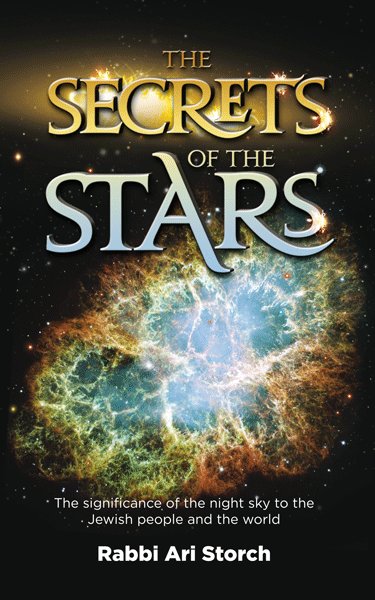
As next week's solar eclipse approaches I couldn't help but think of a quick thought that I mentioned in the appendix of The Secrets of the Stars. It is interesting to see that in the year of the Exodus as Klal Yisrael were approaching Har Sinai there was a solar eclipse, too. That eclipse occurred on Rosh Chodesh Sivan just as this upcoming one will happen in close proximity to that date.
Solar eclipses always occur on or very near to Rosh Chodesh because in order for them to happen the sun, moon, and earth must be in a straight line, syzygy (note: this is a great Scrabble word). This alignment is, by definition, a molad. Due to the fact that our calendar is based on calculations and estimates, the calculated molad and the actual molad can fall on different dates. Thus, eclipses do not always occur on Rosh Chodesh itself.
As the pesukim teach us, we battled Amalek in the second half of the month of Iyar. On the first of Sivan we camped, in united fashion, at Sinai and were given the Torah shortly afterwards. The solar eclipse that occurred on that Rosh Chodesh would have been recognized as being extremely symbolic. Chazal teach that such eclipses symbolize bad tidings for the other nations of the world. Klal Yisrael, often seen as being represented by the moon metaphorically, would be seen as blocking the light of the sun, often considered to metaphorically represent the other nations.
After decimating the superpower of the world, Egypt, and the battling our formidable foe, Amalek, we were about to receive that which defines us and our destiny the Torah. Sandwiched in between these events was a demonstrable event that displayed that there was to be a new nation to shed light unto the world Klal Yisrael. May we soon merit to live up to that very high standard which is required of us!
Solar eclipses always occur on or very near to Rosh Chodesh because in order for them to happen the sun, moon, and earth must be in a straight line, syzygy (note: this is a great Scrabble word). This alignment is, by definition, a molad. Due to the fact that our calendar is based on calculations and estimates, the calculated molad and the actual molad can fall on different dates. Thus, eclipses do not always occur on Rosh Chodesh itself.
As the pesukim teach us, we battled Amalek in the second half of the month of Iyar. On the first of Sivan we camped, in united fashion, at Sinai and were given the Torah shortly afterwards. The solar eclipse that occurred on that Rosh Chodesh would have been recognized as being extremely symbolic. Chazal teach that such eclipses symbolize bad tidings for the other nations of the world. Klal Yisrael, often seen as being represented by the moon metaphorically, would be seen as blocking the light of the sun, often considered to metaphorically represent the other nations.
After decimating the superpower of the world, Egypt, and the battling our formidable foe, Amalek, we were about to receive that which defines us and our destiny the Torah. Sandwiched in between these events was a demonstrable event that displayed that there was to be a new nation to shed light unto the world Klal Yisrael. May we soon merit to live up to that very high standard which is required of us!
Tuesday, May 1, 2012
Patience is a Virtue
In this week's parsha (for those in chutz la'aretz), we find a discussion about waiting for the fifth year prior to eating produce outside of Eretz Yisrael. In the fourth year the produce is only able to be eaten in Yerushalayim, and in the first three it is prohibited completely. Just after this portion the Torah prohibits one to eat the flesh of an animal while it is still convulsing from being slaughtered (this translation is based on Chazal's interpretation; they also attribute to this prohibition that one may not eat prior to davening, and that one may not eat from a sacrifice prior to its blood being appropriately sprinkled on the altar). Following this prohibition are the prohibitions of acting superstitiously and divining the future through astrological means.
The juxtaposition of these mitzvos is confusing as there does not seem to be much similarity between them. Perhaps, reading these portions from the Rambam's perspective allows one a possible answer. The Rambam famously rejected astrology and superstitions as being anything more than foolishness. He writes in many places that adherence to these ideas is antithetical to Torah values since the purpose of man is to ascend from the beasts via his superior intellect and to use this intellect to serve God. By making use of these pseudosciences, one is essentially rejecting that which is demanded of him.
Thus, perhaps, the Rambam understood that these mitzvos demonstrate that one must exercise patience prior to acting. The section dealing with produce clearly shows that one must wait the necessary amount of years prior to partaking of his harvests. Not eating while an animal is still convulsing also demonstrates that one need to be patient and wait until the appropriate time arrives to eat from his recently slaughtered animal (the other examples that Chazal attribute to this mitzvah that I mentioned above demonstrate this same point). Using superstitions and astrology , according to the Rambam, demonstrate the same idea as well. Part of the reason that these practices came about was because people were quick to take anecdotal evidence and attribute the cause of many of events to these superstitions or stellar objects. Had the people thought things through a little more philosophically (or perhaps scientifically) they would not notice a true cause and effect relationship. These practices are often perpetuated due to a lack of patience to examine and understand phenomena objectively. Therefore, from this viewpoint it makes perfect sense why these mitzvos can be found grouped together. Whether or not one subscribes to the philosophy of the Rambam with regard to these matters, the lesson learned is a good one. Exercising caution and patience prior to coming to conclusions is a value we should all try to instill in ourselves and children.
The juxtaposition of these mitzvos is confusing as there does not seem to be much similarity between them. Perhaps, reading these portions from the Rambam's perspective allows one a possible answer. The Rambam famously rejected astrology and superstitions as being anything more than foolishness. He writes in many places that adherence to these ideas is antithetical to Torah values since the purpose of man is to ascend from the beasts via his superior intellect and to use this intellect to serve God. By making use of these pseudosciences, one is essentially rejecting that which is demanded of him.
Thus, perhaps, the Rambam understood that these mitzvos demonstrate that one must exercise patience prior to acting. The section dealing with produce clearly shows that one must wait the necessary amount of years prior to partaking of his harvests. Not eating while an animal is still convulsing also demonstrates that one need to be patient and wait until the appropriate time arrives to eat from his recently slaughtered animal (the other examples that Chazal attribute to this mitzvah that I mentioned above demonstrate this same point). Using superstitions and astrology , according to the Rambam, demonstrate the same idea as well. Part of the reason that these practices came about was because people were quick to take anecdotal evidence and attribute the cause of many of events to these superstitions or stellar objects. Had the people thought things through a little more philosophically (or perhaps scientifically) they would not notice a true cause and effect relationship. These practices are often perpetuated due to a lack of patience to examine and understand phenomena objectively. Therefore, from this viewpoint it makes perfect sense why these mitzvos can be found grouped together. Whether or not one subscribes to the philosophy of the Rambam with regard to these matters, the lesson learned is a good one. Exercising caution and patience prior to coming to conclusions is a value we should all try to instill in ourselves and children.
Tuesday, April 17, 2012
High Noon in the Mikdash?
As mentioned in the last post, I was going to do somewhat of a two part series. The last post dealt with the alignment of the Beis Hamikdash and solar motion as seen here. This one will address the design of the walls of the Beis Hamikdash.
The Gemara teaches that the earliest that the afternoon offering could be performed in the Beis Hamikdash was a half-hour after midday. The Gemara questions why this is true since tradition teaches us that Avraham prayed his afternoon service immediately after midday and that that prayer corresponds to the afternoon sacrificial offering.
The Gemara teaches that the earliest that the afternoon offering could be performed in the Beis Hamikdash was a half-hour after midday. The Gemara questions why this is true since tradition teaches us that Avraham prayed his afternoon service immediately after midday and that that prayer corresponds to the afternoon sacrificial offering.
The Gemara assumes that one would not have a problem ascertaining the exact moment after midday based on the following easy experiment. In order to determine the appropriate time one would need only to look at the shadows cast by the surrounding walls. Since the sun is located toward the eastern portion of the sky in the morning, the shadows cast by it will be protruding to the west. The opposite is true for the afternoon. Therefore, the moment that one sees shadows cast toward the east he knows that it is immediately after midday. The Gemara provides several answers, the first of which is that walls of the Beis Hamikdash were sloped and therefore did not produce an adequate shadow until after a half-hour after midday. (Yoma 28b based on Rashi's commentary) Thus, they were unable to be as accurate as possible with regard to the afternoon offering. (To see a fascinating way to determine the actual slope of the wall based on this approach see Rav Yoav Elan's wonderful post from his blog all about the Second Beis Hamikdash on this topic here.)
The question I have with this approach is that it should not have been difficult to determine midday in the Beis Hamkidash. As discussed in the last post, the Yerushalmi maintains that the walls of the Beis Hamikdash were perfectly aligned to the cardinal directions. If so, there is a very easy method to determining when midday is. Anyone at a latitude north of 23.5N will see the sun directly due south at midday on any given day. Yerushalayim is located at approximately 32 degrees north and certainly well above 23.5. Since the walls of the Beis Hamikdash were aligned perfectly, then one could look at an eastern or western wall from the edge toward the south and when the sun would be directly above that wall he would know that it was midday. This is an extremely easy experiment and, based on it, the sacrificial offering could have been offered just after midday and it would be consistent with the tradition with regards to Avraham's prayer.
The question I have with this approach is that it should not have been difficult to determine midday in the Beis Hamkidash. As discussed in the last post, the Yerushalmi maintains that the walls of the Beis Hamikdash were perfectly aligned to the cardinal directions. If so, there is a very easy method to determining when midday is. Anyone at a latitude north of 23.5N will see the sun directly due south at midday on any given day. Yerushalayim is located at approximately 32 degrees north and certainly well above 23.5. Since the walls of the Beis Hamikdash were aligned perfectly, then one could look at an eastern or western wall from the edge toward the south and when the sun would be directly above that wall he would know that it was midday. This is an extremely easy experiment and, based on it, the sacrificial offering could have been offered just after midday and it would be consistent with the tradition with regards to Avraham's prayer.
There is also good precedent that there were kohanim assigned to such tasks of determining celestial phenomena for the purposes of the service as seen in Yoma 28a where we find that there was someone charged to ascend a wall or roof to witness dawn in order to determine when the morning offering could be brought. We also find other items in the Beis Hamikdash whose design enabled the people to know when certain celestial events were occurring in order to perform mitzvos such as reading the shema; this was accomplished by the nivreshes that would sparkle in the rising sun's rays and alert the people of Yerushalayim to recite shema. (See Yoma 37b and Tosefos' commentary) So, why couldn't there have been someone designated to determine midday based on the solar position above the wall?
The above approach to understanding the Gemara reflects the opinion of Rashi. There are other opinions such as those of Rabbeinu Chananel, the Aruch, and the Otzer Hageonim. They have a variant text of the Gemara which clearly states that the walls were perfectly aligned and they do not maintain that there was any slope to the wall. They maintain that technically the sacrifice could have been brought earlier but this could have caused problems for people living elsewhere. Since others may not be as detail oriented when conducting their own experiments outside the confines of the Temple for the purposes of their personal afternoon prayers; it was necessary in the Beis Hamikdash to delay the offering. Had they not delayed, visitors would have learned from the practice and applied it in an erroneous fashion after leaving. Therefore, a half-hour was added so nobody would err when they went back home. According to this approach, no question arises as it is agreed upon that midday was easy to determine in the Beis Hamikdash.
Based on the above questions, Rashi's approach; however, appears to be in conflict with the above Yerushalmi. It would seem that Rashi was forced to this conclusion because according to the text of the Bavli that he had, the walls were not perfect. Rashi interpreted that to mean that they were sloped. He must understand that the Bavli's passage was in conflict with the Yerushalmi because if it wasn't then midday would have been easy to determine by seeing when the sun was due south. The problem is that this leaves one with another question.
According to Rashi's text, the Gemara mentions that the walls were not aligned perfectly. Since Rashi must maintain that they were not perfectly aligned to the cardinal directions, as stated above, how did he know that they were also sloped? One could have stated that the delay of the shadow being cast was completely dependent on the fact that the walls were not perfectly aligned north to south and not dependent at all on there being a slope. In fact, according to the Otzer Hageonim this was considered by the Bavli prior to it rejecting this assertion based on the Yerushalmi. Keep in mind, the Otzer Hageonim has the text that maintains that the walls were perfectly aligned and straight.
Rather, it seems that Rashi would maintain that they were unsuccessful in aligning the walls to the cardinal directions although an attempt had been made to align them. Because of the attempt, Rashi knew that the alignment would not have been off by a lot. It seems reasonable to minimize the conflict between the Bavli and Yerushalmi. The Yerushalmi puts emphasis on the importance of aligning the walls and then goes to cite that this was done successfully. I do not find it unlikely that the Bavli would agree that there was an attempt to align the walls and it seems clear that Rashi is of the opinion that they were not perfectly aligned, but that they were close to perfect. Had Rashi been comfortable that they were severely misaligned then he never would have had to mention a slope in the wall's design. He could have attributed to the delay of the shadow to the wall's positioning. Rather, the walls must have been aligned enough that the half-hour estimate would be unreasonable and Rashi presumably got that from the fact that an attempt had been made to align them. This would force Rashi into explaining the Gemara to be referring to a slope.
One cannot state that they possibly aligned it, but were unsure if they were successful because after the first year of witnessing the solar motion they would notice that the walls were not perfectly aligned.
If this is true then the determination of the slope of the wall that I linked to earlier here might not be completely accurate because that is based on the assumption that the walls were aligned perfectly to the four directions. Since it is unknown how much deviation from this there was it would be impossible to determine the slope exactly. Although, since it appears that the difference was minimal the calculations are probably extremely close.
No Compasses in the Midbar
Firstly, let me apologize for not having posted for the past several weeks. Baruch Hashem I have been very busy with all sorts of things and then with Pesach I just did not have the time. I, therefore, hope to post a two part series about how the Beis Hamikdash was aligned with solar motion and whether or not that raises some questions about the design of its walls.
This week's parsha teaches of the inaugural service of the mishkan. As we know, the mishkan was a mobile temple in which Bnai Yisrael were able to offer their sacrifices to Hashem in the wilderness. The Yerushalmi teaches that it is very important to have our temples aligned perfectly with the cardinal directions. In addition to each side having proper alignment, it seems that the eastern doorway was constructed in such a fashion that at sunrise on the first day of summer the sun's rays would directly hit the southern doorpost and while rising on the first day of winter the rays would hit the northern doorpost directly. In fact, the Yerushalmi mentions that the prophets of earlier times went to great lengths to ensure that this doorway was aligned precisely. (Yerushalmi Eruvin 32a-33a)
R. Yosa informs one how to discern which direction is which. He teaches that if one draws a line on the horizon starting from where the sun rises on the first of summer and ending at the point where it rises on the first of winter then he will have defined east. If he does so for the spots where the sun sets on the first of winter until the spot where it sets on the first of summer then he will have defined west. The other sides are north and south. (Ibid.)
Based on the above teaching the Yerushalmi states that this precision would have been easy while in Shilo or in Yerushalayim because the populace was familiar with the area prior to erecting the temples in those locations. However, how was this accomplished while wandering in the wilderness. Klal Yisrael needed to build the mishkan right when they arrived at a new location and they would not have had the ability to watch the solar motion for the duration of a year to determine the cardinal directions with precision. Since the compass hadn't been invented yet, they would not have been able to automatically determine which direction was due east, etc. To this the Yerushalmi responds that the aron would miraculously align itself when it reached its destination. Based on this the Levi'im were able to build the mishkan around it. (Ibid.)
The initial questions that I had were why couldn't Klal Yisrael have looked to the northern region of the sky and seen the North Star? Based on that, they would have known which direction is north and they could figure the rest out from there. Almost instantly I started to wonder if this supported Rabbeinu Chananel's opinion that during the encampment in the wilderness the sky was not visible to Klal Yisrael because the clouds and pillars of fire blocked the view. (See Rabbeinu Bacheye Shemos 12:2) I also wondered why R. Yosa would need to give such a relatively difficult and time consuming method. Why not just point to the North Star and take it from there?
I then realized that I was making a very common but obvious mistake. Klal Yisrael could not have used the North Star to guide them in this fashion because there was no North Star!!! In addition to spinning on its axis, our planet wobbles very slowly. Picture a spinning dreidel. As it turns it also has a slight wobble which becomes more pronounced as it slows. Earth, too, has a wobble, although it is much slower than the dreidel's. It takes just under 26,000 years for one full "wobble" to occur. However, there is enough "partial wobble" during smaller durations of time that stars appear to have shifted in the sky. Because of this phenomenon, called the precession of the equinoxes, there was no polar star during the times of the amoraim, tanaim, batei mikdash, Shilo, or even the mishkan. It is a relatively recent occurrence that we have a star, Polaris, that is so close to due north, less than one degree.
So, it would seem that without a compass it would have been very difficult to accurately set the mishkan up optimally. The aron, though, miraculously enabled Klal Yisrael to adequately set up their mishkan and serve Hashem properly.
Part two of this installment should be arriving shortly. It will, hopefully, analyze the architectural design of the walls of the Beis Hamikdash. Using the information in this post the next one will raise some questions as to why Rashi maintains that it was difficult, if not impossible, to determine the exact moment of midday in the Beis Hamikdash.
This week's parsha teaches of the inaugural service of the mishkan. As we know, the mishkan was a mobile temple in which Bnai Yisrael were able to offer their sacrifices to Hashem in the wilderness. The Yerushalmi teaches that it is very important to have our temples aligned perfectly with the cardinal directions. In addition to each side having proper alignment, it seems that the eastern doorway was constructed in such a fashion that at sunrise on the first day of summer the sun's rays would directly hit the southern doorpost and while rising on the first day of winter the rays would hit the northern doorpost directly. In fact, the Yerushalmi mentions that the prophets of earlier times went to great lengths to ensure that this doorway was aligned precisely. (Yerushalmi Eruvin 32a-33a)
R. Yosa informs one how to discern which direction is which. He teaches that if one draws a line on the horizon starting from where the sun rises on the first of summer and ending at the point where it rises on the first of winter then he will have defined east. If he does so for the spots where the sun sets on the first of winter until the spot where it sets on the first of summer then he will have defined west. The other sides are north and south. (Ibid.)
Based on the above teaching the Yerushalmi states that this precision would have been easy while in Shilo or in Yerushalayim because the populace was familiar with the area prior to erecting the temples in those locations. However, how was this accomplished while wandering in the wilderness. Klal Yisrael needed to build the mishkan right when they arrived at a new location and they would not have had the ability to watch the solar motion for the duration of a year to determine the cardinal directions with precision. Since the compass hadn't been invented yet, they would not have been able to automatically determine which direction was due east, etc. To this the Yerushalmi responds that the aron would miraculously align itself when it reached its destination. Based on this the Levi'im were able to build the mishkan around it. (Ibid.)
The initial questions that I had were why couldn't Klal Yisrael have looked to the northern region of the sky and seen the North Star? Based on that, they would have known which direction is north and they could figure the rest out from there. Almost instantly I started to wonder if this supported Rabbeinu Chananel's opinion that during the encampment in the wilderness the sky was not visible to Klal Yisrael because the clouds and pillars of fire blocked the view. (See Rabbeinu Bacheye Shemos 12:2) I also wondered why R. Yosa would need to give such a relatively difficult and time consuming method. Why not just point to the North Star and take it from there?
I then realized that I was making a very common but obvious mistake. Klal Yisrael could not have used the North Star to guide them in this fashion because there was no North Star!!! In addition to spinning on its axis, our planet wobbles very slowly. Picture a spinning dreidel. As it turns it also has a slight wobble which becomes more pronounced as it slows. Earth, too, has a wobble, although it is much slower than the dreidel's. It takes just under 26,000 years for one full "wobble" to occur. However, there is enough "partial wobble" during smaller durations of time that stars appear to have shifted in the sky. Because of this phenomenon, called the precession of the equinoxes, there was no polar star during the times of the amoraim, tanaim, batei mikdash, Shilo, or even the mishkan. It is a relatively recent occurrence that we have a star, Polaris, that is so close to due north, less than one degree.
So, it would seem that without a compass it would have been very difficult to accurately set the mishkan up optimally. The aron, though, miraculously enabled Klal Yisrael to adequately set up their mishkan and serve Hashem properly.
Part two of this installment should be arriving shortly. It will, hopefully, analyze the architectural design of the walls of the Beis Hamikdash. Using the information in this post the next one will raise some questions as to why Rashi maintains that it was difficult, if not impossible, to determine the exact moment of midday in the Beis Hamikdash.
Wednesday, March 14, 2012
Demonic Offspring
I hope everyone has been enjoying the beautiful sight of Venus and Jupiter appearing to come very close together in the western sky. From this point on, they will now appear to be separating. Due to their brilliance, most people find this sight to be quite pleasing!
After hearing nice feedback about the last post which focused on the significance of certain planets as taught by Rabbeinu Bacheye, I figured that I would follow up with a possible theory about a certain passage from Pesachim. The Gemara teaches that initially there was a female demon named Igras the daughter of Machlas who would cause harm to people in the nighttime. Rabbi Chaninah b. Dosa limited this demon's abilities of destruction to only Tuesday nights and Friday nights. Later, Abaye took even this limited amount of time from this demon. (Pesachim 112b)
The Maharsha comments that it is possible that this demon is actually the offspring of the Machlas who was the daughter of Yishmael who was also the wife of Eisav. Citing Midrash, the Maharsha states that just like we know that Adam produced demons for 130 years after he sinned, so too, the union of Machlas and Eisav produced demons.
As mentioned many times in this post, every night/day is considered to be influenced by one of the seven ancient planets (sun, moon, Mercury, Venus, Mars, Jupiter, and Saturn). The two nights to which Igras the daughter of Machlas was initially limited to having control of were Tuesday nights which are under the control of Saturn and Friday nights which are of Mars. (See Rashi Berachos 58b and Ibn Ezra's Reishis Chachmah) Mars is associated with Eisav and his descendants and Saturn with Yishmael and his descendants. As such it is interesting to see that the the demon which was the product of Eisav and Yishmael's union (Machlas was Yishmael's daughter and Eisav's wife) was relegated to the two nights that are symbolic of these two forces. Of course, Abaye later banished this demon altogether.
After hearing nice feedback about the last post which focused on the significance of certain planets as taught by Rabbeinu Bacheye, I figured that I would follow up with a possible theory about a certain passage from Pesachim. The Gemara teaches that initially there was a female demon named Igras the daughter of Machlas who would cause harm to people in the nighttime. Rabbi Chaninah b. Dosa limited this demon's abilities of destruction to only Tuesday nights and Friday nights. Later, Abaye took even this limited amount of time from this demon. (Pesachim 112b)
The Maharsha comments that it is possible that this demon is actually the offspring of the Machlas who was the daughter of Yishmael who was also the wife of Eisav. Citing Midrash, the Maharsha states that just like we know that Adam produced demons for 130 years after he sinned, so too, the union of Machlas and Eisav produced demons.
As mentioned many times in this post, every night/day is considered to be influenced by one of the seven ancient planets (sun, moon, Mercury, Venus, Mars, Jupiter, and Saturn). The two nights to which Igras the daughter of Machlas was initially limited to having control of were Tuesday nights which are under the control of Saturn and Friday nights which are of Mars. (See Rashi Berachos 58b and Ibn Ezra's Reishis Chachmah) Mars is associated with Eisav and his descendants and Saturn with Yishmael and his descendants. As such it is interesting to see that the the demon which was the product of Eisav and Yishmael's union (Machlas was Yishmael's daughter and Eisav's wife) was relegated to the two nights that are symbolic of these two forces. Of course, Abaye later banished this demon altogether.
Subscribe to:
Posts (Atom)