Every Shabbos morning we sing the Keil Adon prayer. It is a very beautiful description of how Hashem has empowered the luminaries to shine forth and how they are completely subservient to Him. There is a lot of mysticism hinted to in this prayer and it mentions the idea of the Merkava as well as containing some very deep kabbalistic secrets.
Interestingly, as the Abudraham points out, one can find a hint to the five planets that are visible to the naked eye: Saturn, Jupiter, Mars, Venus and Mercury. The last verse reads,
"שבח נותנים לו כל צבא מרום"
"Praise is given to Him from the hosts of the heaven."
If one takes the first letters of the primary words; shin, nun, kaf, tzadi and mem, he will find that they can spell Shabsai (Saturn), Nogah (Venus), Kochav (Mercury), Tzedek (Jupiter) and Maadim (Mars). Thus, all the naked eye luminaries are found in this prayer. The sun and moon were mentioned in the earlier verses and the other five are hinted to in this verse.
Additionally, if one looks at how many words there are in between each comma he will notice that there are 5 then 5, then a bunch of 4's and finally the last two are 6 and 6. The first two segments, each of five, says the Abudraham, represent the Ten Commandments. All the verses that have 4 per segment equal a total of 72 which represents one of Hashem's holy names which contains 72 letters. The last two segments, each of 6, represent the twelve signs of the zodiac. Thus, not only are all the luminaries hinted to in this prayer, but the twelve signs of the zodiac can be seen as well.
The Abudraham was certainly far more familiar with the mystical intricacies and the nuances and style used by this prayer's composer. Had it not been for his commentary I would gave suggested one other piece. The verse above that hinted to the planets also contained the word לו. For some reason the Abudraham felt the composer was not alluding to anything with this word. Had it not been for this statement I would have suggested that the lamed that begins this word is hinting to Levana (moon) and then six of the seven luminaries would have been mentioned in this verse. Why is the sun the only not mentioned you ask? Well, I would have suggested that is because it is mentioned in the earlier verse when we are told that "Hashem called to the sun and it radiated light." If so, why is the moon hinted you may ask, since the moon was mentioned in that same verse as it says, "He saw and affixed the shape of the moon?" To this I would have responded that that verse is really only discussing the moon because by doing so it gives perspective to the sun's purpose. The Abudraham states that the meaning of that verse is that Hashem called to the sun in order for it to shine light. Hashem then created the moon so that many would recognize that the sun has a counterpart and it is therefore not befitting to worship the sun. Thus, the moon is not really being mentioned in that sentence to tell us about the moon, rather, that verse is focused on the sun.
In fact, the Rokeach gives a very detailed commentary on this prayer, as well. In it he shows how this prayer is mainly discussing the sun. The segments of 4 each which are what the bulk of the prayer is comprised is viewed as pairs of 4 which equal 8. The Rokeach then discussed how there are 8 angels that are charged with carrying out the solar motion and there are a total of 72 every day. Thus, we have these segments of pairs of four which total 72. With all this I would have suggested that six of the seven luminaries are hinted to in that other verse and the seventh, the sun, is the focus of the entire prayer. However, I gladly defer to the Abudraham as his knowledge of the mysticism and the nuances and style of the composer is clearly far greater than mine.
Sunday, February 27, 2011

Wednesday, February 23, 2011
Night Light
In the beginning of this week's Parsha we are informed that Moshe gathered together all of Klal Yisrael in order to begin the construction of the Mishkan. (See Rashbam, Ibn Ezra and Ramban Shemos 35:1) It seems that in order to build the Mishkan, the place from which Hashem's glory could be perceived, it was necessary for the entirety of Klal Yisrael to be gathered together. I have always seen this as being an extremely important lesson. In order for Klal Yisrael to allow Hashem's glory to shine through our actions, it is first necessary for all of us to unify and act as one.
I also find it interesting to note that this Parsha is generally read as we approach the spring. Not only do we find many ideas of unification in the Megillah which is read during the month of Adar, but there is a very interesting phenomenon that occurs in the sky this time of year. After the sun sets below the horizon its light is still able to be seen due to it being reflected off the atmosphere and clouds. This is why after sunset we have a period of twilight during which the sun's rays slowly diminish until they are no longer perceptible. As spring approaches one can see another form of light even after twilight. Although the sun's rays are no longer being reflected back to our planet, in dark skies one can perceive a glow emanating from the horizon and rising up into the sky. It appears somewhat triangular with its base on the ground and is a very pretty sight. This light is called zodiacal light and what we are seeing is many tiny dust particles that are far off in the Solar System that are reflecting the sun's light. This is very similar to how planets can be seen as stars since they too reflect the sun's light and are then perceptible back here on Earth. This light can be seen twice a year, during the spring and autumn. In the springtime it is noticeable after the evening twilight and in the autumn it is noticeable just before dawn.
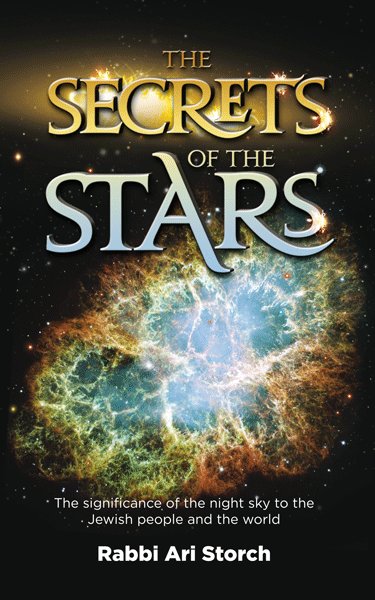
(There have been those that have published that this is what the Yerushalmi in Berachos calls Ayeles HaShachar. I do not believe that to be the case, but unfortunately this post is not the place for that discussion. My upcoming book does address the identity of Ayeles HaShachar. I have already signed with a publisher and we are working on the book to have it ready for publication soon. I will try and keep everyone posted as the time nears. Sorry for one of many shameless plugs, more will be forthcoming IY"H.)
Each speck of dust by itself reflects a miniscule amount of light. In fact, by themselves these cosmic grains would be totally invisible to us. However, when they are all seen together they reflect a beautiful glow. If one were to condense all the specks into one big chunk, its light would be so bright that it would be the brightest star/planet in the sky. Each member of Klal Yisrael reflects light in a unique way, but it is when all the individuals unite that we can see a truly brilliant radiance.

I also find it interesting to note that this Parsha is generally read as we approach the spring. Not only do we find many ideas of unification in the Megillah which is read during the month of Adar, but there is a very interesting phenomenon that occurs in the sky this time of year. After the sun sets below the horizon its light is still able to be seen due to it being reflected off the atmosphere and clouds. This is why after sunset we have a period of twilight during which the sun's rays slowly diminish until they are no longer perceptible. As spring approaches one can see another form of light even after twilight. Although the sun's rays are no longer being reflected back to our planet, in dark skies one can perceive a glow emanating from the horizon and rising up into the sky. It appears somewhat triangular with its base on the ground and is a very pretty sight. This light is called zodiacal light and what we are seeing is many tiny dust particles that are far off in the Solar System that are reflecting the sun's light. This is very similar to how planets can be seen as stars since they too reflect the sun's light and are then perceptible back here on Earth. This light can be seen twice a year, during the spring and autumn. In the springtime it is noticeable after the evening twilight and in the autumn it is noticeable just before dawn.
(There have been those that have published that this is what the Yerushalmi in Berachos calls Ayeles HaShachar. I do not believe that to be the case, but unfortunately this post is not the place for that discussion. My upcoming book does address the identity of Ayeles HaShachar. I have already signed with a publisher and we are working on the book to have it ready for publication soon. I will try and keep everyone posted as the time nears. Sorry for one of many shameless plugs, more will be forthcoming IY"H.)
Each speck of dust by itself reflects a miniscule amount of light. In fact, by themselves these cosmic grains would be totally invisible to us. However, when they are all seen together they reflect a beautiful glow. If one were to condense all the specks into one big chunk, its light would be so bright that it would be the brightest star/planet in the sky. Each member of Klal Yisrael reflects light in a unique way, but it is when all the individuals unite that we can see a truly brilliant radiance.

Thursday, February 17, 2011
Starbooks
After Klal Yisrael sinned by creating the Golden Calf, Moshe Rabeinu ascended Har Sinai with the mission of finding forgiveness for this nation from Hashem. In his plea, Moshe requests that if Hashem refuses to forgive Klal Yisrael then Moshe should be “erased from the book that Hashem has written.” Hashem responds by saying that it is not Moshe who has sinned and it is not he who deserves to be erased.(See Shemos 32:32-33)
The commentators offer their understanding as to what book Moshe was mentioning. While one understanding is that this book is a reference to the Torah, the Ibn Ezra offers another possibility. He suggests that this “book” is actually a reference to the stars. All of life and the various forces of nature that affect life are encoded in the stars. Essentially, the sky acts as the bridge between the physical and metaphysical realm. Everything that occurs on this planet originates from the heavenly realm, passes through the realm of the stars and is then showered upon this planet. The stars are thus called “Hashem’s book” since all of life is “written” into them; their movements and position reflect that which is happening on Earth. Moshe’s request was for the representation of the forces that affect him to be erased from this book, meaning he was asking to die if Hashem was not going to forgive Klal Yisrael. (Ibn Ezra Shemos 32:32; also see Ramban and Rabbeinu Bachye Shemos 32:32)
Although Hashem did, in fact, forgive Klal Yisrael, we are taught that because of Moshe’s tremendous stature that his request could not be completely denied. According to the understanding that it was the Torah from which Moshe was requesting to be erased from, this erasure is found in Parshas Tetzaveh. Starting from Shemos when the Torah first discusses his birth, Tetzaveh is the only Parsha that does not contain Moshe’s name in it. (See above comentaries) The question one can ask is how then was this request seen in accordance with the understanding that Moshe was requesting erasure from the book of stars?
I find the following parallels very telling and based on them would like to offer some suggestions. When one simply counts the amount of Parshiyos that exist from Shemos, the first in which Moshe is mentioned, through the end one will find there to be thirty-six Parshiyos. Thus, Moshe’s name can be found in thrity-five of the thirty-six Parshiyos. (The Parshiyos were added by considering all double Parshiyos that can be read as such in Eretz Yisrael as one Parsha).
When Moshe asks Hashem to erase him he says that it should be done from "ספרך" “your book”. The numerical value of this word is 360. Since ancient times it has been recognized that all the stars occupy an area of 360 degrees and this number reflects a spiritual understanding of the stars themselves. (See Ibn Ezra Reishis Chachama 1) The sky above the horizon is 180 degrees and then that which is below the ground adds the other 180. If we take a ratio of 36:360 which represents the total of Parshiyos to the total degrees in the sky then we should expect Moshe to be erased from 10 degrees in the sky because our ratio would equal 1:10.
When Hashem responds to Moshe he says, “מי אשר חטא לי אמחנו מספרי” “Who is it that has sinned that I should erase him from My book.” The book is now called as “My” book as opposed to “Your” book since it is now Hashem’s response and from His perspective. As mentioned before, ספרך, had a value of 360, but ספרי has only a value of 350. The מ at the beginning of these words connotes to take from. Perhaps Hashem when saying, “מי”, which literally means “who”, was also meant to be taken as “from י”. Meaning that Hashem was going to take י, whose numerical value is 10, from ספרך which equals 360. The result is ספרי which equals 350. Thus, our ratio from above 36:360 = 35:350. Just like 35/36 of the Parshiyos have Moshe in them and he was erased from 1/36, so too, 350/360 of the degrees of the sky have Moshe expressed and 10/360 do not.
We find the Chazal compare Moshe to the sun and his disciple Yehoshua to the moon. (Bava Basra 75a) The moon receives its light from the sun just like a disciple receives his Torah knowledge from his rebbi. When the moon or the planets are too close in the sky to the sun then they cannot be seen because they are washed out by the massive daylight and we cannot see them with our eyes. The moon is the brightest object in the sky, after the sun, but even the moon needs to have some distance from the sun in order for our eyes to see the reflected light. Although it is theoretically possible to see this when the moon is just under 7 degrees from the sun when there are abnormally good seeing conditions, practically it is only seen when the moon is about 10 degrees from the sun. Part of what displays the sun’s greatness is that it is able to “give” from its light and reflect off the other planets and the moon. This cannot occur when the moon is too close. This element of the sun’s light is “erased” from 10 degrees of space in the sky since the planets, and even the moon, cannot be seen that close to it. Perhaps, this is a representation of Moshe being erased in the sky. It is interesting to note that Moshe was pleading on behalf of a nation of his disciples who did not live up to the standards he had left for them. His countenance was not reflecting on them in the way he wanted it to and this is comparable to the moon’s inability to reflect the countenance of the sun when it is too close. (Also see Rashi Shemos 32:32-33)
Another possibility could also have to do with the moon and its apparent position relative to the sun. Throughout the year the sun appears to move from one area of the stellar background to another. The path it takes is called the ecliptic. The moon always stays relatively close to the ecliptic, as well. The moon will always be within approximately 5 degrees north or south of the ecliptic (it can be as much as 180 degrees east or west of the position of the sun on the ecliptic which is why the moon can be many more than just 5 degrees from the sun). We know that the sun is considered to be the ruler of daytime and the moon of the nighttime. (See Bereishis 1:16) Perhaps the erasure of Moshe, compared to the sun, is seen that his competing counterpart has ten degrees through which it can move while the sun always stays directly on the ecliptic. I must say, though, that both of these are only theories and I would love to hear if anyone has any other suggestion. I definitely feel more partial to the first of these two suggestions.
The commentators offer their understanding as to what book Moshe was mentioning. While one understanding is that this book is a reference to the Torah, the Ibn Ezra offers another possibility. He suggests that this “book” is actually a reference to the stars. All of life and the various forces of nature that affect life are encoded in the stars. Essentially, the sky acts as the bridge between the physical and metaphysical realm. Everything that occurs on this planet originates from the heavenly realm, passes through the realm of the stars and is then showered upon this planet. The stars are thus called “Hashem’s book” since all of life is “written” into them; their movements and position reflect that which is happening on Earth. Moshe’s request was for the representation of the forces that affect him to be erased from this book, meaning he was asking to die if Hashem was not going to forgive Klal Yisrael. (Ibn Ezra Shemos 32:32; also see Ramban and Rabbeinu Bachye Shemos 32:32)
Although Hashem did, in fact, forgive Klal Yisrael, we are taught that because of Moshe’s tremendous stature that his request could not be completely denied. According to the understanding that it was the Torah from which Moshe was requesting to be erased from, this erasure is found in Parshas Tetzaveh. Starting from Shemos when the Torah first discusses his birth, Tetzaveh is the only Parsha that does not contain Moshe’s name in it. (See above comentaries) The question one can ask is how then was this request seen in accordance with the understanding that Moshe was requesting erasure from the book of stars?
I find the following parallels very telling and based on them would like to offer some suggestions. When one simply counts the amount of Parshiyos that exist from Shemos, the first in which Moshe is mentioned, through the end one will find there to be thirty-six Parshiyos. Thus, Moshe’s name can be found in thrity-five of the thirty-six Parshiyos. (The Parshiyos were added by considering all double Parshiyos that can be read as such in Eretz Yisrael as one Parsha).
When Moshe asks Hashem to erase him he says that it should be done from "ספרך" “your book”. The numerical value of this word is 360. Since ancient times it has been recognized that all the stars occupy an area of 360 degrees and this number reflects a spiritual understanding of the stars themselves. (See Ibn Ezra Reishis Chachama 1) The sky above the horizon is 180 degrees and then that which is below the ground adds the other 180. If we take a ratio of 36:360 which represents the total of Parshiyos to the total degrees in the sky then we should expect Moshe to be erased from 10 degrees in the sky because our ratio would equal 1:10.
When Hashem responds to Moshe he says, “מי אשר חטא לי אמחנו מספרי” “Who is it that has sinned that I should erase him from My book.” The book is now called as “My” book as opposed to “Your” book since it is now Hashem’s response and from His perspective. As mentioned before, ספרך, had a value of 360, but ספרי has only a value of 350. The מ at the beginning of these words connotes to take from. Perhaps Hashem when saying, “מי”, which literally means “who”, was also meant to be taken as “from י”. Meaning that Hashem was going to take י, whose numerical value is 10, from ספרך which equals 360. The result is ספרי which equals 350. Thus, our ratio from above 36:360 = 35:350. Just like 35/36 of the Parshiyos have Moshe in them and he was erased from 1/36, so too, 350/360 of the degrees of the sky have Moshe expressed and 10/360 do not.
We find the Chazal compare Moshe to the sun and his disciple Yehoshua to the moon. (Bava Basra 75a) The moon receives its light from the sun just like a disciple receives his Torah knowledge from his rebbi. When the moon or the planets are too close in the sky to the sun then they cannot be seen because they are washed out by the massive daylight and we cannot see them with our eyes. The moon is the brightest object in the sky, after the sun, but even the moon needs to have some distance from the sun in order for our eyes to see the reflected light. Although it is theoretically possible to see this when the moon is just under 7 degrees from the sun when there are abnormally good seeing conditions, practically it is only seen when the moon is about 10 degrees from the sun. Part of what displays the sun’s greatness is that it is able to “give” from its light and reflect off the other planets and the moon. This cannot occur when the moon is too close. This element of the sun’s light is “erased” from 10 degrees of space in the sky since the planets, and even the moon, cannot be seen that close to it. Perhaps, this is a representation of Moshe being erased in the sky. It is interesting to note that Moshe was pleading on behalf of a nation of his disciples who did not live up to the standards he had left for them. His countenance was not reflecting on them in the way he wanted it to and this is comparable to the moon’s inability to reflect the countenance of the sun when it is too close. (Also see Rashi Shemos 32:32-33)
Another possibility could also have to do with the moon and its apparent position relative to the sun. Throughout the year the sun appears to move from one area of the stellar background to another. The path it takes is called the ecliptic. The moon always stays relatively close to the ecliptic, as well. The moon will always be within approximately 5 degrees north or south of the ecliptic (it can be as much as 180 degrees east or west of the position of the sun on the ecliptic which is why the moon can be many more than just 5 degrees from the sun). We know that the sun is considered to be the ruler of daytime and the moon of the nighttime. (See Bereishis 1:16) Perhaps the erasure of Moshe, compared to the sun, is seen that his competing counterpart has ten degrees through which it can move while the sun always stays directly on the ecliptic. I must say, though, that both of these are only theories and I would love to hear if anyone has any other suggestion. I definitely feel more partial to the first of these two suggestions.
Tuesday, February 8, 2011
Was the Ner Maaravi a Planet?
The Rema discusses some of the extremely deep symbolism found in the design of the Menorah. One of the ideas that he mentions is that it reflects the universe as whole. For example, the seven branches correspond to the seven planets that are visible to the naked eye: the sun, moon, Mercury, Venus, Mars, Jupiter and Saturn. (Toras HaOlah 1:15)
Interestingly enough, out of the seven lamps on the Menorah, this week's Torah portion teaches us that it was only necessary to keep one specific lamp burning constantly, both day and night. (Shemos 27:20) Although this lamp is referred to as the Ner Maaravi, the Western Lamp, it was not the western most lamp. The Gemara cites two opinions regarding which lamp it was. One opinion states that it was the center lamp, but it was tilted somewhat towards the west. The other opinion maintains that it was the second lamp from the east, therefore, it was the first that had a western position relative to another lamp. (Menachos 98b) Whichever one it was, it was kept lit both during the day and night, the other lamps were only kept lit throughout the night.
The question is, "Which of the seven planets was designated to be lit eternally?" Rav Yehonasan Eibshitz offers an answer to this question. He suggests that this eternal lamp was the one that corresponded to the moon. He states that the word for this lamp "Maaravi" comes from the root "erev" which also means evening. This, claims Rav Eibshitz, shows the connection between this lamp and the moon which is a nighttime object. Additionally, the moon was granted the ability to reign during both day and night (it is visible often times during the day) and, therefore, it too displays a constant burning. This, however, leaves one with a question. How could the moon be displayed as having light all the time when the source of its light, the sun, sometimes would be shown as extinguished since the lamp that symbolised the sun did not have to be lit all the time? Rav Eibshitz answers this problem by quoting from mystical sources that maintain that the moon has its own light when Hashem's glory is able to be seen through Klal Yisrael. It is only now while we are in exile that the moon merely reflects the sun's rays. (Tiferes Yehonasan Shemos 27:20)
If not for the above explanation I would have offered a different suggestion. Firstly, six of the seven planets are nighttime objects, the exception being the sun, and therefore the term "erev" is equally appropriate to all. Secondly, although "erev" and "Maaravi" are similar words they mean very different things, so the similar wording does not necessarily rule out the sun. Thirdly, although the moon does rule both in the day and night; Mercury, Venus and Mars can also be seen both in the daytime and at night (although I concede that Rav Eibshitz mentions that the moon, specifically, was given the ability to shine in the daytime in order to pacify it). Fourthly, One could even suggest that the sun's rays are seen at night since that is the source of the light of the other planets which are all visible at nighttime.
Therefore, barring Rav Eibshitz's understanding I would have suggested that the identity of the corresponding planet is disputed just like the location of the lamp is disputed. The planets are considered to be arranged in the following order: Saturn, Jupiter, Mars, sun, Venus, Mercury and the moon. (See Rashi Berachos 59b and Rambam Yesodai HaTorah 3) According to the opinion that the Ner Maaravi is the middle lamp then I would suggest that that corresponds to the middle planet, the sun. It is appropriate for it to be lit constantly because it is the source of light for the other planets (even at night) and it shines the brightest during the day. Even when any of the planets is visible during the day, it is not visible the entire day but only for a portion of it. The sun, however, shines all day. Therefore, during the day its lamp needed to be lit to express its dominance throughout the day and during the night it needed to be lit to express that it is the source for the other lights.
The other opinion that states that the Ner Maaravi is the second lamp, I believe, would maintain that it corresponds to Jupiter (referred to as Tzedek, Righteousness, by Chazal). Tzedek, say Chazal, is the astrological force that represents the Torah. (Baraisa D'Mazalos 15) The Rema maintains that the Menorah as a whole expressed the concept of Torah. (Toras HaOlah 1:15-16) Therefore, it would be appropriate for this lamp of the Menorah to shine all the time to display that the nature of that which the Menorah expresses, the Torah, can never be extinguished.
Interestingly enough, out of the seven lamps on the Menorah, this week's Torah portion teaches us that it was only necessary to keep one specific lamp burning constantly, both day and night. (Shemos 27:20) Although this lamp is referred to as the Ner Maaravi, the Western Lamp, it was not the western most lamp. The Gemara cites two opinions regarding which lamp it was. One opinion states that it was the center lamp, but it was tilted somewhat towards the west. The other opinion maintains that it was the second lamp from the east, therefore, it was the first that had a western position relative to another lamp. (Menachos 98b) Whichever one it was, it was kept lit both during the day and night, the other lamps were only kept lit throughout the night.
The question is, "Which of the seven planets was designated to be lit eternally?" Rav Yehonasan Eibshitz offers an answer to this question. He suggests that this eternal lamp was the one that corresponded to the moon. He states that the word for this lamp "Maaravi" comes from the root "erev" which also means evening. This, claims Rav Eibshitz, shows the connection between this lamp and the moon which is a nighttime object. Additionally, the moon was granted the ability to reign during both day and night (it is visible often times during the day) and, therefore, it too displays a constant burning. This, however, leaves one with a question. How could the moon be displayed as having light all the time when the source of its light, the sun, sometimes would be shown as extinguished since the lamp that symbolised the sun did not have to be lit all the time? Rav Eibshitz answers this problem by quoting from mystical sources that maintain that the moon has its own light when Hashem's glory is able to be seen through Klal Yisrael. It is only now while we are in exile that the moon merely reflects the sun's rays. (Tiferes Yehonasan Shemos 27:20)
If not for the above explanation I would have offered a different suggestion. Firstly, six of the seven planets are nighttime objects, the exception being the sun, and therefore the term "erev" is equally appropriate to all. Secondly, although "erev" and "Maaravi" are similar words they mean very different things, so the similar wording does not necessarily rule out the sun. Thirdly, although the moon does rule both in the day and night; Mercury, Venus and Mars can also be seen both in the daytime and at night (although I concede that Rav Eibshitz mentions that the moon, specifically, was given the ability to shine in the daytime in order to pacify it). Fourthly, One could even suggest that the sun's rays are seen at night since that is the source of the light of the other planets which are all visible at nighttime.
Therefore, barring Rav Eibshitz's understanding I would have suggested that the identity of the corresponding planet is disputed just like the location of the lamp is disputed. The planets are considered to be arranged in the following order: Saturn, Jupiter, Mars, sun, Venus, Mercury and the moon. (See Rashi Berachos 59b and Rambam Yesodai HaTorah 3) According to the opinion that the Ner Maaravi is the middle lamp then I would suggest that that corresponds to the middle planet, the sun. It is appropriate for it to be lit constantly because it is the source of light for the other planets (even at night) and it shines the brightest during the day. Even when any of the planets is visible during the day, it is not visible the entire day but only for a portion of it. The sun, however, shines all day. Therefore, during the day its lamp needed to be lit to express its dominance throughout the day and during the night it needed to be lit to express that it is the source for the other lights.
The other opinion that states that the Ner Maaravi is the second lamp, I believe, would maintain that it corresponds to Jupiter (referred to as Tzedek, Righteousness, by Chazal). Tzedek, say Chazal, is the astrological force that represents the Torah. (Baraisa D'Mazalos 15) The Rema maintains that the Menorah as a whole expressed the concept of Torah. (Toras HaOlah 1:15-16) Therefore, it would be appropriate for this lamp of the Menorah to shine all the time to display that the nature of that which the Menorah expresses, the Torah, can never be extinguished.
Wednesday, January 26, 2011
Will the Real Adar Stand Up?
This Shabbos we will pronounce the upcoming month of Adar! As we all have probably figured out by now, this year is a leap year and has thirteen months instead of the usual twelve. There are two Adars this year!
The question then arises, which is the real Adar? While one may be tempted to suggest that Adar I is the real one because it stands to reason that the extra month would be added after all the "real" months have had their turn, one could counter that Purim is celebrated in the second Adar and that displays that it is the "true" Adar. Conversely, one could state that Purim is only in the second Adar because the Gemara teaches that we like to have Purim close to Pesach, (see Megillah 6b) if not for this reason, perhaps, Purim would have been in Adar 1. So, which is it?
A few interesting cases may shed some light on this question. Let's say that a boy was born in Adar a standard twelve month year. Then, during the year he is to be bar mitzvahed there are two Adars, in which one does he celebrate his bar mitzvah? The Rema teaches that he celebrates his bar mitzvah in the second Adar. (Rema O.C. 55:10) Based on this logic, one would assume that Adar II is the real Adar.
However, let's look at the following case. A man dies in Adar during a standard year. In which month do his children observe the yahrzeit (for the purposes of fasting for those whose custom it is to fast on a yahrzeit), Adar I or II? Rav Yosef Karo maintains that it is observed in Adar II and this seems consistent with the Rema's opinion cited above. (Shulchan Aruch O.C. 565:7) However, the Rema mentions that there are those who disagree and observe the yahrzeit in Adar I and that that was the custom in his time. (Rema O.C. 565:7; see Magen Avraham for another opinion and as always, if applicable ask your Rav for practical application) The Rema's opinion here seems to contradict the his opinion cited above. Regarding a yahrzeit he is of the opinion that one should observe Adar 1 (at least he cites that that is the custom), yet, regarding a bar mitzvah he says Adar II and does not bother to even cite a dissenting opinion.
Rav Dovid Cohen shared the following insight with me last year, although he did mention that it was not to be taken authoritatively. Our months follow the cycle of the moon, but our year follows the sun. This is demonstrated in that the beginning of the month is dependent on the new moon, but the festivals need to be in specific seasons which is a function of the sun. (Rambam Hilchos Kiddush HaChodesh 1:1) In order to keep the year in sync with the seasons we add extra Adars every so often. Therefore, dates that are dependent on the month in which they fall will follow the order of the months. One could argue that the real Adar is the twelfth month, or that it is the last month. When it comes to a yahrzeit it does not matter what time of the year it is, it matters which month it is. Therefore, Rav Karo maintains one follows the thirteenth month and the Rema states that it is the twelfth that is important. Perhaps, this would display their opinions as to which is the "true" Adar.
A bar mitzvah is not a function of the month, rather, it is when the boy is thirteen YEARS old. If there is a thirteenth month that has been added to that year then it shows that the seasons were not in sync with the calendar and an adjustment was necessary. The boy, therefore, will have his bar mitzvah in the proper time of the year and celebrate it in Adar II. In this light, there is no contradiction in the Rema's statements. Although, the term "yahrzeit" seems interesting since it means time of the YEAR.
The question then arises, which is the real Adar? While one may be tempted to suggest that Adar I is the real one because it stands to reason that the extra month would be added after all the "real" months have had their turn, one could counter that Purim is celebrated in the second Adar and that displays that it is the "true" Adar. Conversely, one could state that Purim is only in the second Adar because the Gemara teaches that we like to have Purim close to Pesach, (see Megillah 6b) if not for this reason, perhaps, Purim would have been in Adar 1. So, which is it?
A few interesting cases may shed some light on this question. Let's say that a boy was born in Adar a standard twelve month year. Then, during the year he is to be bar mitzvahed there are two Adars, in which one does he celebrate his bar mitzvah? The Rema teaches that he celebrates his bar mitzvah in the second Adar. (Rema O.C. 55:10) Based on this logic, one would assume that Adar II is the real Adar.
However, let's look at the following case. A man dies in Adar during a standard year. In which month do his children observe the yahrzeit (for the purposes of fasting for those whose custom it is to fast on a yahrzeit), Adar I or II? Rav Yosef Karo maintains that it is observed in Adar II and this seems consistent with the Rema's opinion cited above. (Shulchan Aruch O.C. 565:7) However, the Rema mentions that there are those who disagree and observe the yahrzeit in Adar I and that that was the custom in his time. (Rema O.C. 565:7; see Magen Avraham for another opinion and as always, if applicable ask your Rav for practical application) The Rema's opinion here seems to contradict the his opinion cited above. Regarding a yahrzeit he is of the opinion that one should observe Adar 1 (at least he cites that that is the custom), yet, regarding a bar mitzvah he says Adar II and does not bother to even cite a dissenting opinion.
Rav Dovid Cohen shared the following insight with me last year, although he did mention that it was not to be taken authoritatively. Our months follow the cycle of the moon, but our year follows the sun. This is demonstrated in that the beginning of the month is dependent on the new moon, but the festivals need to be in specific seasons which is a function of the sun. (Rambam Hilchos Kiddush HaChodesh 1:1) In order to keep the year in sync with the seasons we add extra Adars every so often. Therefore, dates that are dependent on the month in which they fall will follow the order of the months. One could argue that the real Adar is the twelfth month, or that it is the last month. When it comes to a yahrzeit it does not matter what time of the year it is, it matters which month it is. Therefore, Rav Karo maintains one follows the thirteenth month and the Rema states that it is the twelfth that is important. Perhaps, this would display their opinions as to which is the "true" Adar.
A bar mitzvah is not a function of the month, rather, it is when the boy is thirteen YEARS old. If there is a thirteenth month that has been added to that year then it shows that the seasons were not in sync with the calendar and an adjustment was necessary. The boy, therefore, will have his bar mitzvah in the proper time of the year and celebrate it in Adar II. In this light, there is no contradiction in the Rema's statements. Although, the term "yahrzeit" seems interesting since it means time of the YEAR.
Monday, January 17, 2011
Raining Angels in Shevat
In our Kedusha we sanctify Hashem's name just like the heavenly angels. The framework of our Kedusha is found in this week's Haftarah which is Yeshaya's prophetic vision of the angelic beings sanctifying Hashem's name. In both this vision and in our Kedusha we recall that the angels call from "This one to the other and say, 'Holy, holy, holy, etc.'"
Rav Yehonasan Eibshitz zt"l offers a reason for the angels calling to each other prior to the sanctification. He states that the metaphysical construct of our universe is such that the physical realm is mirrored by the realm of the astrological forces above it, and that realm is mirrored by the angelic beings above that. Hashem "resides" above all this and He showers upon the angelic beings His will which they then shower down upon the astrological forces which in turn shower this countenance upon our world. Thus, when the angels are calling from one to another they are really showering down from one level to that below it in order to rain upon our world Hashem's glory.
Perhaps, one can understand this concept with a little more clarity when the following point is added. Rabbeinu Bachye mentions in several places (as does the Maharsha) that the Hebrew word for "this", the word used to express each angel that is calling to the other, has a numerical value of twelve. The significance says Rabbeinu Bachye (and the Maharsha) is that the expression of Hashem's glory is often found in items that are symbolised by the number twelve. In this world there are the twelve tribes of Yisrael. In the astrological realm there are the twelve signs of the zodiac and in the angelic realm there are twelve distinct groupings of angels that correspond to these lower realms. Thus, based on Rav Eibshitz's explanation, one can see how the expression of this calling to one another of the angels seems to really be the demonstration of the twelve angels showering upon the twelve signs of the zodiac which then shower upon the twelve tribes of Yisrael.
Perhaps, part of the connection of this week's Haftarah to the Parsha can be seen in this light. When Yisro joins Klal Yisrael in the Wilderness he mentions that he has now become aware that Hashem is greater than all the other gods. Rav Eibshitz questions this statement as it makes it seem as if the other gods have power, but that Hashem is greater. This is clearly not a true statement since Hashem is the Force of all forces. Rather, explains Rav Eibshitz, Yisro was mentioning that it would appear as if evil things were supposed to happen to Klal Yisrael and its leaders based on the astrological signs. The Gemara teaches that Avraham Avinu's astrological sign suggested that he was never to have a child. Moshe Rabbeinu was supposed to have drowned based on his celestial influence. However, Hashem turned these forces around and made them shower good upon Avraham and Moshe. Rav Eibshitz suggests that Hashem used the force itself to shower good as opposed to just ignoring it completely to display that the force is really just acting out the will of Hashem. It is not that it has power and that sometimes Hashem's power is greater, rather, it is merely a way through which Hashem Himself influences the world. Similar astrological events were prevalent through Kriyas Yam Suf and Yisro was actually stating that he now knows that Hashem controls the astrological forces, which had unfortunately become known as gods to the other nations. He was not saying that they have power, rather, he was saying that they just shower forth Hashem's power into this world.
In this regard we see that both the Parsha and Haftarah display Hashem's power through the methods in which He chooses to affect this world. He chooses to shower upon the angels His will and they do the same to the astrological forces which then continue to do so to Klal Yisrael. It is interesting to note that in all that was mentioned above, the prime entities that Hashem's will is showered upon are the twelve tribes of Yisrael.
It would seem that it is through the twelve tribes that the rest of the world is able to recognize that Hashem is the controller of the universe. This is certainly what happened with Yisro. It is fascinating to point out that we are currently in the month of Shevat. The Midrash homiletically expresses the meanings of the names of the months. Shevat's name comes from the word Shevet which can mean a rod or staff. This month's name represents the harsh rains that come down like a rod or a staff that comes down harshly upon its victim. The Midrash continues that this is clearly only a reference to how things are in Eretz Yisrael since it is depicting the rainy season as it is in that region and not how it is elsewhere in the world.
The month's names are not Hebrew, rather, they were taken from the Babylonians while we were in exile. It is fascinating to see that even the Babylonians expressed the concept of rains being showered down from heaven from the perspective of Yisrael (in this case the land which is reserved for the twelve tribes of Yisrael). Whether they were aware of it or not, they recognized somehow that Hashem's will, expressed as being showered upon humanity like rain, comes through Yisrael.
Rav Yehonasan Eibshitz zt"l offers a reason for the angels calling to each other prior to the sanctification. He states that the metaphysical construct of our universe is such that the physical realm is mirrored by the realm of the astrological forces above it, and that realm is mirrored by the angelic beings above that. Hashem "resides" above all this and He showers upon the angelic beings His will which they then shower down upon the astrological forces which in turn shower this countenance upon our world. Thus, when the angels are calling from one to another they are really showering down from one level to that below it in order to rain upon our world Hashem's glory.
Perhaps, one can understand this concept with a little more clarity when the following point is added. Rabbeinu Bachye mentions in several places (as does the Maharsha) that the Hebrew word for "this", the word used to express each angel that is calling to the other, has a numerical value of twelve. The significance says Rabbeinu Bachye (and the Maharsha) is that the expression of Hashem's glory is often found in items that are symbolised by the number twelve. In this world there are the twelve tribes of Yisrael. In the astrological realm there are the twelve signs of the zodiac and in the angelic realm there are twelve distinct groupings of angels that correspond to these lower realms. Thus, based on Rav Eibshitz's explanation, one can see how the expression of this calling to one another of the angels seems to really be the demonstration of the twelve angels showering upon the twelve signs of the zodiac which then shower upon the twelve tribes of Yisrael.
Perhaps, part of the connection of this week's Haftarah to the Parsha can be seen in this light. When Yisro joins Klal Yisrael in the Wilderness he mentions that he has now become aware that Hashem is greater than all the other gods. Rav Eibshitz questions this statement as it makes it seem as if the other gods have power, but that Hashem is greater. This is clearly not a true statement since Hashem is the Force of all forces. Rather, explains Rav Eibshitz, Yisro was mentioning that it would appear as if evil things were supposed to happen to Klal Yisrael and its leaders based on the astrological signs. The Gemara teaches that Avraham Avinu's astrological sign suggested that he was never to have a child. Moshe Rabbeinu was supposed to have drowned based on his celestial influence. However, Hashem turned these forces around and made them shower good upon Avraham and Moshe. Rav Eibshitz suggests that Hashem used the force itself to shower good as opposed to just ignoring it completely to display that the force is really just acting out the will of Hashem. It is not that it has power and that sometimes Hashem's power is greater, rather, it is merely a way through which Hashem Himself influences the world. Similar astrological events were prevalent through Kriyas Yam Suf and Yisro was actually stating that he now knows that Hashem controls the astrological forces, which had unfortunately become known as gods to the other nations. He was not saying that they have power, rather, he was saying that they just shower forth Hashem's power into this world.
In this regard we see that both the Parsha and Haftarah display Hashem's power through the methods in which He chooses to affect this world. He chooses to shower upon the angels His will and they do the same to the astrological forces which then continue to do so to Klal Yisrael. It is interesting to note that in all that was mentioned above, the prime entities that Hashem's will is showered upon are the twelve tribes of Yisrael.
It would seem that it is through the twelve tribes that the rest of the world is able to recognize that Hashem is the controller of the universe. This is certainly what happened with Yisro. It is fascinating to point out that we are currently in the month of Shevat. The Midrash homiletically expresses the meanings of the names of the months. Shevat's name comes from the word Shevet which can mean a rod or staff. This month's name represents the harsh rains that come down like a rod or a staff that comes down harshly upon its victim. The Midrash continues that this is clearly only a reference to how things are in Eretz Yisrael since it is depicting the rainy season as it is in that region and not how it is elsewhere in the world.
The month's names are not Hebrew, rather, they were taken from the Babylonians while we were in exile. It is fascinating to see that even the Babylonians expressed the concept of rains being showered down from heaven from the perspective of Yisrael (in this case the land which is reserved for the twelve tribes of Yisrael). Whether they were aware of it or not, they recognized somehow that Hashem's will, expressed as being showered upon humanity like rain, comes through Yisrael.
Tuesday, December 14, 2010
Constellational Representation at Yaakov's Funeral
In the Parsha we are taught of the honorable funeral services given to Yaakov Avinu. (Bereishis 50:9-13) The Gemara teaches that when the procession came to Goren Atad the children of Eisav, Yishmael and Keturah came to war with Bnai Yisrael. However, when they saw that Yosef's crown adorned the casket of Yaakov they also placed their crowns there as a sign of respect. Between them they placed a total of 36 crowns. (Sotah 13a)
Before going into some symbolism that can be found in the above, let us first understand something about how the ancients viewed the night sky. All together there are 48 constellations that were accepted in ancient times. It is through these 48 that all the forces of nature were perceived to be flowing from the metaphysical realm into the physical. (See Ibn Ezra Shemos 33:21) Of these 48 there are 12 constellations that are considered to be the primary ones and these are the constellations of the zodiac. These twelve represent the main forces of nature. (Baraisa D'Mazalos 1) The other 36 are important, but considered somewhat subservient to these twelve.
Chazal compare the 12 Shevatim to the 12 constellations of the zodiac. (See Pesikta Zutrasa Shemos 1:2 as an example) Just like the metaphysical word actualizes into the physical world through the 12 zodiacal constellations, so too, the Shevatim bring forth the metaphysical realities into this physical world. However, that leaves one to question, who are the representatives of the lower 36 constellations?
In Zevachim we find that the commentators see the children of Avraham Avinu, other than Yitzchak, as more honorable than those of the other nations. Yet, they are not as honorable as Yitzchak. (See Maharsha and Keren Orah Zevachim 62b) Tosefos Shantz understands that the 36 crowns were those of the children of Eisav, Yishmael and Keturah. He states that 1-12 were of the 12 Yishmaelite nobles. 13-26 were of the generals of Eisav listed in the end of Parshas VaYishlach. The rest came from Keturah's children who had a total of 10 crowns. 27-32 were of the six son's of Keturah. However, in the listing of Keturah's children several grandchildren are listed. Tosefos Shantz understands that each firstborn son inherited his father's crown and did not establish a new nation, thus, that son's crown does not add to the total. He also do not count Dedan as having established a crown presumably because he did not establish a nation as seen by Targum Onkelos. That leaves Midyan's children who were Eiphah, who inherited his father's crown, 33 was of Eipher, 34 Chanoch, 35 Avidah and 36 was Elda'ah. (Tosefos Shantz Sotah 13a)
Fascinatingly, we see that when Yaakov died it was as if all the forces of nature came to honor him at his funeral procession. The twelve signs of the zodiac were the primary ones and they were displayed by his twelve sons who were carrying the casket. The other thirty-six constellations were shown by the established kingdoms that sprouted forth of Avraham's descendants. It was a monumental event that had all of nature mourning its loss!
Before going into some symbolism that can be found in the above, let us first understand something about how the ancients viewed the night sky. All together there are 48 constellations that were accepted in ancient times. It is through these 48 that all the forces of nature were perceived to be flowing from the metaphysical realm into the physical. (See Ibn Ezra Shemos 33:21) Of these 48 there are 12 constellations that are considered to be the primary ones and these are the constellations of the zodiac. These twelve represent the main forces of nature. (Baraisa D'Mazalos 1) The other 36 are important, but considered somewhat subservient to these twelve.
Chazal compare the 12 Shevatim to the 12 constellations of the zodiac. (See Pesikta Zutrasa Shemos 1:2 as an example) Just like the metaphysical word actualizes into the physical world through the 12 zodiacal constellations, so too, the Shevatim bring forth the metaphysical realities into this physical world. However, that leaves one to question, who are the representatives of the lower 36 constellations?
In Zevachim we find that the commentators see the children of Avraham Avinu, other than Yitzchak, as more honorable than those of the other nations. Yet, they are not as honorable as Yitzchak. (See Maharsha and Keren Orah Zevachim 62b) Tosefos Shantz understands that the 36 crowns were those of the children of Eisav, Yishmael and Keturah. He states that 1-12 were of the 12 Yishmaelite nobles. 13-26 were of the generals of Eisav listed in the end of Parshas VaYishlach. The rest came from Keturah's children who had a total of 10 crowns. 27-32 were of the six son's of Keturah. However, in the listing of Keturah's children several grandchildren are listed. Tosefos Shantz understands that each firstborn son inherited his father's crown and did not establish a new nation, thus, that son's crown does not add to the total. He also do not count Dedan as having established a crown presumably because he did not establish a nation as seen by Targum Onkelos. That leaves Midyan's children who were Eiphah, who inherited his father's crown, 33 was of Eipher, 34 Chanoch, 35 Avidah and 36 was Elda'ah. (Tosefos Shantz Sotah 13a)
Fascinatingly, we see that when Yaakov died it was as if all the forces of nature came to honor him at his funeral procession. The twelve signs of the zodiac were the primary ones and they were displayed by his twelve sons who were carrying the casket. The other thirty-six constellations were shown by the established kingdoms that sprouted forth of Avraham's descendants. It was a monumental event that had all of nature mourning its loss!
Subscribe to:
Posts (Atom)