Towards the end of the Parsha we read about the war with Amalek. Yehoshua was charged with leading the army to combat this formidable foe. The classic commentaries to Tanach with regard to Shaul HaMelech's campaign against Amalek teach us that the Amaleki were proficient in the occult and were especially educated in the ways to harness the astrological forces to their benefit. Rabbeinu Bachye maintains that in the battle discussed in this week's parsha that Amaleki chose soldiers who were destined to live out the year based on their astrological sign.
By utilizing such a "draft", the Amaleki were confident that they could not be defeated since their soldiers were unable to be killed. Rabbeinu Bachye mentions that this is why it was necessary for Yehoshua to choose men to go out to war. The pesukim in our Parsha state that Yehoshua was charged with selecting men to go out to fight. Rabbeinu Bachye is of the opinion that this was not merely a command that Yehoshua assemble an army. Yehoshua was charged with finding people with the correct astrological signs so that the Israelite army would also be comprised of men who were unable to fall in war. This, says Rabbeinu Bachye, is why when Yehoshua's offensive was successful that the pasuk mentions that the enemy was weakened. They were only weakened because they could not be defeated entirely. The enemy soldiers became weak and tired of battle, but there were no actual casualties of war since the soldiers were unable to be killed in battle.
Rabbeinu Bachye makes it seem that the individuals mentioned had specific astrological signs and that is what protected them. The Chizkuni takes a slightly different approach. The Chizkuni also is of the opinion that the Amaleki were harnessing the forces of the astrological signs and that Yehoshua was charged with selecting Israelite warriors who had appropriate astrological signs to combat them. Unlike Rabbeinu Bachye's interpretation, the Chizkuni felt that the Amaleki were using the astrological forces directly to fight the Israelites. Therefore, the Chizkuni states that the men chosen to fight Amalek were not those who had specific astrological signs, rather, they were those who had no astrological sign whatsoever. Yehoshua was charged with gathering men who had been born in Adar II. The Chizkuni maintains that Adar II has no mazal since all twelve have been assigned to the earlier twelve months. Since they were not bound by mazal, the Amaleki would not be able to use astrology to combat them.
This approach of the Chizkuni is fantastic because based on Rashi (Rosh Hashana 11b) and the Ibn Ezra (Reishis Chachma and Sefer HaTaamim) it would seem that the astrological signs are based on the solar calendar and that which we state that the lunar months align with the signs is only based on the average years. In a solar calendar there are always twelve months and all months are assigned a sign. The Chizkuni would seem to argue with this premise and state that the signs are based on the lunar months. Perhaps the Chizkuni would actually maintain that the nations of the world who only have the solar calendar would have their signs based on the solar calendar, but the Jews would be based on the lunar calendar. If that is true then this technique of Yehoshua was a surprise defense that the Amaleki had probably not counted upon. The Amaleki, only familiar with the solar calendar, would have no understanding of what it would mean to have a person that has no mazal since they have no such month of Adar II. Yehoshua, on the other hand led an army of signless warriors and routed this archenemy of ours.
I find it interesting to mention something written by Rav Dovid Cohen in his Masos Kappai. Rav Cohen points out that Ephraim and Menashe were compared to fish by their grandfather Yaakov when he blessed them in Parshas VeYechi. Sometimes we find that Ephraim and Menashe are considered like one Shevet and are referred to as Shevet Yosef, and other times we find that they are two and called by their own names. This is similar to Adar, symbolized by the astrological sign of fish, which is sometimes one month and other times, like this year, two. It is important to note that Yehoshua was a scion of Ephraim and it was he who led this army in this week's parsha.
On a different note, often I have heard people try and prove the existence of aliens from this week's Haftarah. See here for a discussion of this topic.
Monday, January 30, 2012

Thursday, January 19, 2012
Stars Fell on Egypt
Hashem informs Moshe that He will harden Paaroh's heart and then Hashem will punish the Egyptians and take His hosts, His nation of Bnai Yisrael from Egypt. (Shemos 7:3-4) The word "hosts" is generally applied to the celestial objects and attests to the fact that they display Hashem's might and rule over the world. Rabbeinu Bachye points out that Bnai Yisrael are compared to the stars and are therefore worthy of this title. Both the stars and Bnai Yisrael represent the connection of this world to the next, they both display how Hashem controls all of nature. (Rabbeinu Bachye Shemos 7:4)
I was wondering if, perhaps, there was some additional meaning and a reference to the stars themselves. Perhaps, one could read the verse as stating that Hashem was taking out His hosts AND His nation of Bnai Yisrael. In this regard there are two entities being freed, the first is Bnai Yisrael and the second is the multitudes of celestial objects.
We know that the Egyptians had a distorted view of the world and therefore practiced pagan idolatry. The purposes of these practices most often was to connect with the astrological forces which were perceived as gods. (See Rambam's description of Avodah Zarah in the beginning of Hilchos Avodah Zarah) In fact, the Meiri mentions that all Egyptian practices and even their daily life was centered around astrology. (Meiri Pesachim 5a)
The celestial objects, meant to display Hashem's glory, had effectively been "taken captive" and enslaved by the Egyptians. The Egyptians were using the celestial objects in acts of defiance against Hashem instead of their appropriate use which would be to recognize Hashem's greatness. Just like the Jewish nation was enslaved, so too, the stars that represent Klal Yisrael were subjugated.
Most of us are familiar with what is, perhaps, the most famous Ramban on Chumash. Towards the end of Parshas Bo the Ramban shows how the Makkos were effectively a teaching tool to show that Hashem controls the world and that He is still in charge. This concept is the antithesis to the Egyptian philosphy. Instead of all the various celestial forces being independent forces of nature, it is Hashem that is really the Force of all forces and He is completely in control. The Makkos effectively displayed Hashem's taking of His stars back. Once Hashem showed that He was in charge, the stars could no longer be seen as deities, rather, they displayed His phenomenal might. Thus, Hashem took both Bnai Yisrael and His hosts of stars from Egypt.
I was wondering if, perhaps, there was some additional meaning and a reference to the stars themselves. Perhaps, one could read the verse as stating that Hashem was taking out His hosts AND His nation of Bnai Yisrael. In this regard there are two entities being freed, the first is Bnai Yisrael and the second is the multitudes of celestial objects.
We know that the Egyptians had a distorted view of the world and therefore practiced pagan idolatry. The purposes of these practices most often was to connect with the astrological forces which were perceived as gods. (See Rambam's description of Avodah Zarah in the beginning of Hilchos Avodah Zarah) In fact, the Meiri mentions that all Egyptian practices and even their daily life was centered around astrology. (Meiri Pesachim 5a)
The celestial objects, meant to display Hashem's glory, had effectively been "taken captive" and enslaved by the Egyptians. The Egyptians were using the celestial objects in acts of defiance against Hashem instead of their appropriate use which would be to recognize Hashem's greatness. Just like the Jewish nation was enslaved, so too, the stars that represent Klal Yisrael were subjugated.
Most of us are familiar with what is, perhaps, the most famous Ramban on Chumash. Towards the end of Parshas Bo the Ramban shows how the Makkos were effectively a teaching tool to show that Hashem controls the world and that He is still in charge. This concept is the antithesis to the Egyptian philosphy. Instead of all the various celestial forces being independent forces of nature, it is Hashem that is really the Force of all forces and He is completely in control. The Makkos effectively displayed Hashem's taking of His stars back. Once Hashem showed that He was in charge, the stars could no longer be seen as deities, rather, they displayed His phenomenal might. Thus, Hashem took both Bnai Yisrael and His hosts of stars from Egypt.
Wednesday, January 11, 2012
Reflections of the World, Klal Yisrael, and the Sky
The ancients saw the sky as comprised of 48 constellations and 7 planets (the sun, moon, Mercury, Venus, Mars, Jupiter, and Saturn). Of the 48 constellations, 12 were given more significant status and are considered to be the primary constellations. These are the twelve signs of the zodiac. All of nature was considered to be influenced by all these factors.
For example, the week is comprised of seven days and each one is assigned a different planet as its representative. (Ibn Ezra Reishis Chachma 4; also see Rashi Berachos 59b) The world is also considered to be divided into 7 major regions. Eretz Yisrael is considered to be the center of these. Rabbeinu Bachye references this when discussing the order in which the Shevatim are listed in the beginning of this week's Parsha. The Shevatim are listed as: Reuven, Shimon, Levi, Yehuda, Yissachar, Zevulun, and Binyamin. Rabbeinu Bachye points out that Binyamin is out of place in this list. As the last born he should be after his older brother Yosef. Rather, he is chosen to be the seventh in this order because the Beis HaMikdash was destined to be in his portion of Eretz Yisrael. Just as Eretz Yisrael is the seventh region of the world, so too, Binyamin is listed as number seven. Rabbeinu Bachye then asks how Eretz Yisrael can be considered to be the seventh since it is the middle region and must therefore be considered to be the fourth of seven. To this he responds that it is comparable to Shabbos. Shabbos is listed as the seventh day of the week in the manner in which we talk. However, Shabbos is sometimes referred to as being the central day of the week. From Wednesday on we focus on the coming Shabbos, and through the following Tuesday we are still feeling the holiness of the previous. Thus, although it is perceived as the middle and central day, it is also numbered as seven. So too, Eretz Yisrael is the middle and central portion of the world, but it is also number seven. (Rabbeinu Bachye Shemos 1:2-3)
Moshe Rabbeinu was also numbered seven if one thinks about it. If one follows the generations from Avraham Avinu, Moshe was the seventh. The list is: Avraham, Yitzchak, Yaakov, Levi, Kehas, Amram, and Moshe. He was born on the seventh day of the month (interestingly enough it was of the twelfth month, see later in this post about the symbolism of twelve). It is of note, that his natural birthdate should not have been 7 Adar, rather, he was born prematurely. His natural birthdate would have been 6 Sivan (the day upon which Hashem gave us the Torah years later). (See Rabbeinu Bachye Shemos 2:2) All these number sevens seem to show the culmination and completion of world and a representation of a more perfected state.
The number twelve also shows completion of the natural order of events. There are twelve months and twelve Shevatim. Chazal compare the 12 Shevatim to the 12 mazalos. (See Pesikta Zutrasa Shemos 1:2 as an example) In Moshe's prophetic vision in the Parsha, Hashem tells him, "This is my name eternally, etc." (Shemos 3:15) Rabbeinu Bachye points out that the numerical value for the Hebrew for "this" is equal to 12. Hashem was teaching Moshe some deep understandings of His name. Kabbalistically one can take the four letter name of Hashem and rearrange it in 12 different fashions. (See Shaarei Orah of Rabbeinu Yosef Gikatilla and Bnai Yisaschar who assign a different configuration to each month/mazal of the year). If one puts all the configurations together he will have a total of 48 letters and this is considered to be the 48 lettered name of Hashem. (Rabbeinu Bachye Shemos 3:15) How fascinating that Hashem encoded the way this world works to also have 12 primary constellations, but to also have a total of 48 when viewing the sky as a whole.
For example, the week is comprised of seven days and each one is assigned a different planet as its representative. (Ibn Ezra Reishis Chachma 4; also see Rashi Berachos 59b) The world is also considered to be divided into 7 major regions. Eretz Yisrael is considered to be the center of these. Rabbeinu Bachye references this when discussing the order in which the Shevatim are listed in the beginning of this week's Parsha. The Shevatim are listed as: Reuven, Shimon, Levi, Yehuda, Yissachar, Zevulun, and Binyamin. Rabbeinu Bachye points out that Binyamin is out of place in this list. As the last born he should be after his older brother Yosef. Rather, he is chosen to be the seventh in this order because the Beis HaMikdash was destined to be in his portion of Eretz Yisrael. Just as Eretz Yisrael is the seventh region of the world, so too, Binyamin is listed as number seven. Rabbeinu Bachye then asks how Eretz Yisrael can be considered to be the seventh since it is the middle region and must therefore be considered to be the fourth of seven. To this he responds that it is comparable to Shabbos. Shabbos is listed as the seventh day of the week in the manner in which we talk. However, Shabbos is sometimes referred to as being the central day of the week. From Wednesday on we focus on the coming Shabbos, and through the following Tuesday we are still feeling the holiness of the previous. Thus, although it is perceived as the middle and central day, it is also numbered as seven. So too, Eretz Yisrael is the middle and central portion of the world, but it is also number seven. (Rabbeinu Bachye Shemos 1:2-3)
Moshe Rabbeinu was also numbered seven if one thinks about it. If one follows the generations from Avraham Avinu, Moshe was the seventh. The list is: Avraham, Yitzchak, Yaakov, Levi, Kehas, Amram, and Moshe. He was born on the seventh day of the month (interestingly enough it was of the twelfth month, see later in this post about the symbolism of twelve). It is of note, that his natural birthdate should not have been 7 Adar, rather, he was born prematurely. His natural birthdate would have been 6 Sivan (the day upon which Hashem gave us the Torah years later). (See Rabbeinu Bachye Shemos 2:2) All these number sevens seem to show the culmination and completion of world and a representation of a more perfected state.
The number twelve also shows completion of the natural order of events. There are twelve months and twelve Shevatim. Chazal compare the 12 Shevatim to the 12 mazalos. (See Pesikta Zutrasa Shemos 1:2 as an example) In Moshe's prophetic vision in the Parsha, Hashem tells him, "This is my name eternally, etc." (Shemos 3:15) Rabbeinu Bachye points out that the numerical value for the Hebrew for "this" is equal to 12. Hashem was teaching Moshe some deep understandings of His name. Kabbalistically one can take the four letter name of Hashem and rearrange it in 12 different fashions. (See Shaarei Orah of Rabbeinu Yosef Gikatilla and Bnai Yisaschar who assign a different configuration to each month/mazal of the year). If one puts all the configurations together he will have a total of 48 letters and this is considered to be the 48 lettered name of Hashem. (Rabbeinu Bachye Shemos 3:15) How fascinating that Hashem encoded the way this world works to also have 12 primary constellations, but to also have a total of 48 when viewing the sky as a whole.
Tuesday, January 3, 2012
Was Yissachar Really the One to Regulate the Calendar?
We are taught that the bracha given to Yissachar in this week’s parsha is a reference to the fact that his children were experts in astronomy. In fact, the Rambam takes for granted that there used to be many volumes written by the descendants of Yissachar that detailed the celestial movements (Kiddush HaChodesh 17:24). As such they were able to determine the appropriate times for Rosh Chodesh as well as other complexities within the calendar. This is seen by his comparison to a donkey which is capable of shouldering a heavy yoke in order to carry it for its master.
Perhaps, the similarity does not end there. The pasuk tells us that he has no rest and that he sleeps outside of the city. This might be part of how Chazal knew to specifically apply Yissachar’s yoke to the necessary knowledge of astronomy. As any astronomer knows, one must leave the city in order that the pollution and city lights not interfere with his observations (yes, even back then the heat from the fires and the associated lights would create viewing problems). Also, it is obvious that the astronomer must be awake in the nighttime and, therefore, he will not be getting much rest.
The question that one might ask is that it seems from the Gemara in Rosh Hashana (24-25) that the household of the nasi, the descendants of David HaMelech (from Yehuda not Yissachar), was charged with this knowledge (see Superhuman Sight post of August 5). This apparent contradiction can, perhaps, be resolved by the Radak’s commentary to Divrei HaYamim 1 12:32. The Radak mentions that it was necessary for the king to play a role in the process of implementing the calendar.
It would seem that Yissachar was never the one who actually made the calendar, he was just the advisor to the king. The king, himself, would make the final determination whether he wished to listen to Yissachar’s advice. Therefore, after the monarchy had been abolished, it was the king’s descendants, the houshold of the nasi, that were empowered with this decision making. This is similar to the donkey in the bracha. The donkey is not carrying the burden for himself, he is merely shouldering it for his master. Yissachar’s extensive knowledge of astronomy was not intended to be used by Yissachar, rather, the king would implement it, as necessary.
To leave off with an oddity found regarding the earlier pasuk from Divrei HaYamim, the Targum seems to mention that Yissachar was also alloted the task of serving as the official astrologers of Klal Yisrael. It would seem that they would read the stars for astrological signs and determine (and, perhaps, advise the king) of the future events and of the necssary actions that Klal Yisrael must take. This is an amazingly fascinating explanation because this practice is something that is deemed to be a biblical prohibition (see Y”D 179). For more on this
click here.
Also, for a celestial description of Yaakov's funeral click here.
Perhaps, the similarity does not end there. The pasuk tells us that he has no rest and that he sleeps outside of the city. This might be part of how Chazal knew to specifically apply Yissachar’s yoke to the necessary knowledge of astronomy. As any astronomer knows, one must leave the city in order that the pollution and city lights not interfere with his observations (yes, even back then the heat from the fires and the associated lights would create viewing problems). Also, it is obvious that the astronomer must be awake in the nighttime and, therefore, he will not be getting much rest.
The question that one might ask is that it seems from the Gemara in Rosh Hashana (24-25) that the household of the nasi, the descendants of David HaMelech (from Yehuda not Yissachar), was charged with this knowledge (see Superhuman Sight post of August 5). This apparent contradiction can, perhaps, be resolved by the Radak’s commentary to Divrei HaYamim 1 12:32. The Radak mentions that it was necessary for the king to play a role in the process of implementing the calendar.
It would seem that Yissachar was never the one who actually made the calendar, he was just the advisor to the king. The king, himself, would make the final determination whether he wished to listen to Yissachar’s advice. Therefore, after the monarchy had been abolished, it was the king’s descendants, the houshold of the nasi, that were empowered with this decision making. This is similar to the donkey in the bracha. The donkey is not carrying the burden for himself, he is merely shouldering it for his master. Yissachar’s extensive knowledge of astronomy was not intended to be used by Yissachar, rather, the king would implement it, as necessary.
To leave off with an oddity found regarding the earlier pasuk from Divrei HaYamim, the Targum seems to mention that Yissachar was also alloted the task of serving as the official astrologers of Klal Yisrael. It would seem that they would read the stars for astrological signs and determine (and, perhaps, advise the king) of the future events and of the necssary actions that Klal Yisrael must take. This is an amazingly fascinating explanation because this practice is something that is deemed to be a biblical prohibition (see Y”D 179). For more on this
click here.
Also, for a celestial description of Yaakov's funeral click here.
Monday, December 26, 2011
The Goodness of Teves
Although the names of the months that we have in our calendar are of Babylonian origin (See Ramban Bo 12:2), there is a Midrash that darshans them. (See Torah Sheleimah Miluim Parshas Bo P.177) It is very interesting to look through the quick list of names and their meanings and gain perspective about the months.
The month that we are just beginning now is called Teves. The Midrash tells us that the grammatical root of this word is Tov which means good. It was during this month that Og and Sichon were killed in battle by Moshe Rabeinu. So formidable were these foes that this Midrash states that even Moshe Rabbeinu feared them. The goodness of this victory is so great that this month's name reflects that.
It is interesting to point out something that I posted a little bit about last year during this time. Teves is the time when the winter solstice occurs. While this event is the first day of winter, it also marks the shortest day of the year. From this point on the days begin to get longer. Thus, it has been seen historically as a time of renewal and a time to emerge from darkness. Another Midrash mentions that the astrological sign of this month, G'di (Capricorn[us]) shows such a renewal. (Tanchuma Haazinu 1) This sign is shown as a young goat that is the epitome of an immature creatue about to begin developing. It is similar to the T'leh (Aries) that is the sign of Nisan, the first month, since they are both ovine creatures. The T'leh, says this Midrash, has gone through its lifecycle and it is now in Teves that it finds a rejuvination and renewal as a young kid, G'di. How apropos then that the first portion of the conquest of Eretz Yisrael happened at this time. This was a new beginning for Klal Yisrael as they were starting anew in their land.
This is also the reason why many cultures have their new year at around this time. They viewed this time of year as a time of rebirth and, therefore, the connection to start a new year now was seen as obvious.
The month that we are just beginning now is called Teves. The Midrash tells us that the grammatical root of this word is Tov which means good. It was during this month that Og and Sichon were killed in battle by Moshe Rabeinu. So formidable were these foes that this Midrash states that even Moshe Rabbeinu feared them. The goodness of this victory is so great that this month's name reflects that.
It is interesting to point out something that I posted a little bit about last year during this time. Teves is the time when the winter solstice occurs. While this event is the first day of winter, it also marks the shortest day of the year. From this point on the days begin to get longer. Thus, it has been seen historically as a time of renewal and a time to emerge from darkness. Another Midrash mentions that the astrological sign of this month, G'di (Capricorn[us]) shows such a renewal. (Tanchuma Haazinu 1) This sign is shown as a young goat that is the epitome of an immature creatue about to begin developing. It is similar to the T'leh (Aries) that is the sign of Nisan, the first month, since they are both ovine creatures. The T'leh, says this Midrash, has gone through its lifecycle and it is now in Teves that it finds a rejuvination and renewal as a young kid, G'di. How apropos then that the first portion of the conquest of Eretz Yisrael happened at this time. This was a new beginning for Klal Yisrael as they were starting anew in their land.
This is also the reason why many cultures have their new year at around this time. They viewed this time of year as a time of rebirth and, therefore, the connection to start a new year now was seen as obvious.
Wednesday, December 21, 2011
Dreaming of Astronomically Fat Cows!
In this week’s parsha (Mikeitz), Paroh has some very interesting dreams. In one of his dreams he sees seven fat cows emerging from the river. These unfortunate cows are then devoured by seven emaciated cows that emerged from the river afterwards. (Bereishis 41:1-4)
There are two star clusters, small patches of sky that contain a large amount of stars relative to the small space they occupy, that were discussed by the Ancients, the Hyades and the Pleiades. Both are found in the constellation Taurus/Shor, the Ox. The Pleiades were associated with seven sisters and their five half-sisters were those that the Hyades are said to represent.
The constellation Taurus/Shor has its horns dipping into the Milky Way. The Milky Way is the numerous stars that lie in the plane of our galaxy. Due to their distance from us, and that they are so close to each other (relatively), they appear as a nebulous cloud that wafts through the sky. Or, one could say, they appear as if someone has spilled milk across this area of the sky. Unfortunately, the Milky Way is too faint to see unless one can get far away from city lights. The Milky Way has also been compared to a celestial river since it appears like a glowing river that runs through the night sky.
These clusters can be seen as the two sets of cows that emerged from the river. Since both are in the constellation Taurus/Shor, the Ox, it is reasonable to associate these clusters with cows. These two star clusters, Hyades and Pleiades, would, therefore, appear to be emerging from the river of the Milky Way. The Pleiades, being further away would appear to have emerged first and their half-sisters would be following shortly after. As the story goes, the Hyades had all committed suicide after the death of one of their other siblings and they are seen as constantly weeping. The grim circumstances surrounding these stars does not conjure up a nice image; hence, the emaciated cows.
The obvious question that one should ask is that although the Pleiades symbolize seven sisters, and therefore, seven cows, the Hyades are only five. How could they be the second set of seven cows that emerged from the river? The answer might be that the representation in the sky is depicting what actually occurred and not what was seen in the dream itself. Although there were seven years of famine, we find that for the first two of these years Yosef had stored enough food to support the populace (see Bereishis 47 and Rashi Bereishis 47:18). Nothing is seen regarding the la st five.
There are two star clusters, small patches of sky that contain a large amount of stars relative to the small space they occupy, that were discussed by the Ancients, the Hyades and the Pleiades. Both are found in the constellation Taurus/Shor, the Ox. The Pleiades were associated with seven sisters and their five half-sisters were those that the Hyades are said to represent.
The constellation Taurus/Shor has its horns dipping into the Milky Way. The Milky Way is the numerous stars that lie in the plane of our galaxy. Due to their distance from us, and that they are so close to each other (relatively), they appear as a nebulous cloud that wafts through the sky. Or, one could say, they appear as if someone has spilled milk across this area of the sky. Unfortunately, the Milky Way is too faint to see unless one can get far away from city lights. The Milky Way has also been compared to a celestial river since it appears like a glowing river that runs through the night sky.
These clusters can be seen as the two sets of cows that emerged from the river. Since both are in the constellation Taurus/Shor, the Ox, it is reasonable to associate these clusters with cows. These two star clusters, Hyades and Pleiades, would, therefore, appear to be emerging from the river of the Milky Way. The Pleiades, being further away would appear to have emerged first and their half-sisters would be following shortly after. As the story goes, the Hyades had all committed suicide after the death of one of their other siblings and they are seen as constantly weeping. The grim circumstances surrounding these stars does not conjure up a nice image; hence, the emaciated cows.
The obvious question that one should ask is that although the Pleiades symbolize seven sisters, and therefore, seven cows, the Hyades are only five. How could they be the second set of seven cows that emerged from the river? The answer might be that the representation in the sky is depicting what actually occurred and not what was seen in the dream itself. Although there were seven years of famine, we find that for the first two of these years Yosef had stored enough food to support the populace (see Bereishis 47 and Rashi Bereishis 47:18). Nothing is seen regarding the la
 st five.
Tuesday, December 20, 2011
Was the Menorah a Planetarium?
The Rema (Toras HaOlah 1:15) compares the Menorah of the Beis HaMikdash to a microcosm of the cosmos. He states that the seven branches were symbolic of the seven "stars" that are known to move independant of the regular stellar motions. These "stars" are the sun, moon and the five planets that can be seen by the naked eye (Mercury, Venus, Mars, Jupiter and Saturn).
The comparison does not end there. The Menorah was lit in two stages, first five candles were lit prior to the afternoon sacrifice, and the latter two afterwards. This, says the Rema, demonstrates that the sun and moon, which appear significantly larger than the other five (they look like stars), are different. The fact that they are all lit from the western light also indicates that all these other bodies only reflect the light of the biggest of these, the sun.
There were eleven circular knobs on the Menorah and they represent the eleven spaces in between the twelve mazalos. They are round to demonstrate that the mazalos circle around through the year and, even though we discuss them as starting with T'leh/Nisan and ending with Dagim/Adar, they really have no beginning or end. There are twenty-two cups showing the twenty-two elements of which the universe can be subdivided; water, wind, fire, the twelve mazalos and the seven "stars" mentioned above. The nine flowers that adorned the Menorah were symbolic of the nine spheres that the Greeks perceived to surround the earth. These spheres were perceived to be in motion and through them the objects orbited the earth.
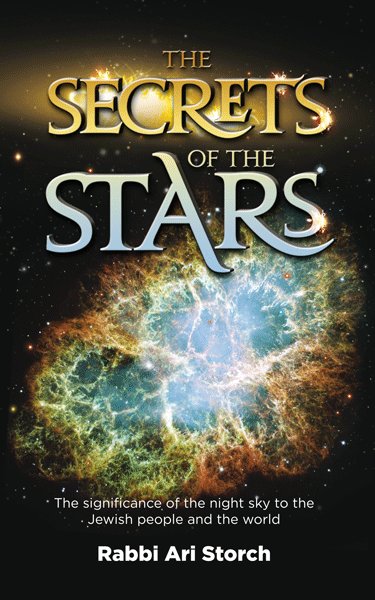
B"H, as I have mentioned in previous posts, it seems that my new book, The Secrets of the Stars, is in bookstores across the US. If anyone will be in the Skokie/Chicago area, I will be speaking there this coming Shabbos and Sunday!
The comparison does not end there. The Menorah was lit in two stages, first five candles were lit prior to the afternoon sacrifice, and the latter two afterwards. This, says the Rema, demonstrates that the sun and moon, which appear significantly larger than the other five (they look like stars), are different. The fact that they are all lit from the western light also indicates that all these other bodies only reflect the light of the biggest of these, the sun.
There were eleven circular knobs on the Menorah and they represent the eleven spaces in between the twelve mazalos. They are round to demonstrate that the mazalos circle around through the year and, even though we discuss them as starting with T'leh/Nisan and ending with Dagim/Adar, they really have no beginning or end. There are twenty-two cups showing the twenty-two elements of which the universe can be subdivided; water, wind, fire, the twelve mazalos and the seven "stars" mentioned above. The nine flowers that adorned the Menorah were symbolic of the nine spheres that the Greeks perceived to surround the earth. These spheres were perceived to be in motion and through them the objects orbited the earth.
B"H, as I have mentioned in previous posts, it seems that my new book, The Secrets of the Stars, is in bookstores across the US. If anyone will be in the Skokie/Chicago area, I will be speaking there this coming Shabbos and Sunday!
Subscribe to:
Posts (Atom)