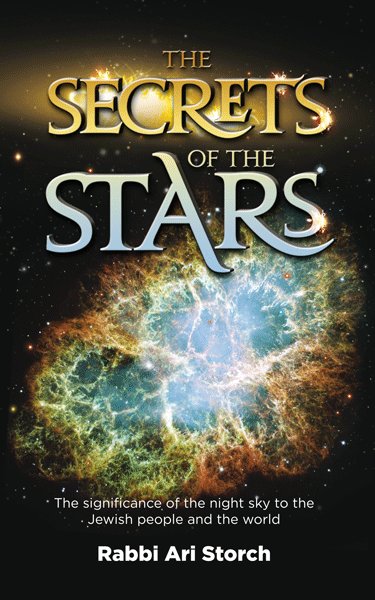
The Sefer Chareidim makes an interesting observation regarding the beginning of this week's Parsha. The Parsha begins with Aharon being informed of the lighting of the Menorah and this segment follows the end of last week's Parsha which discussed the Nesi'im inaugurating the Mizbeach with their sacrifices. The Midrash informs us that Aharon was depressed that the twelve Nesi'im were able to offer sacrifices to inaugurate the Mizbeach, but he was not. Hashem gave Aharon the mitzvah of Menorah and this pacified him.
The Chareidim mentions that we know that the twelve Nesi'im and their sacrifices corresponded to the twelve constellations of the zodiac. (See Bamidbar Rabbah) Thus, their actions were a display of the forces of nature uniting in the service of Hashem and that these heads of Shevet were symbolic of these forces. Aharon was shown that he represented something far superior than these forces of nature, that which is expressed in the Menorah. The Menorah's seven branches symbolize the seven ancient planets: the sun, moon, Mercury, Mars, Venus, Jupiter, and Saturn. As all ancient astrologers were aware, these influences were considered superior to the twelve constellations. Perhaps this is because the constellations are considered the houses and places of these planets and it is the position of these planets that controls how the influence of the twelve constellations will be showered on Earth. (See Ibn Ezra's Reishis Chachma) (See here where a dissenting, albeit hard to understand approach is taken by Rav Eibshitz and here to see that Rav Eibshitz seems to have known of a system far different from the one found in most earlier sources.) Therefore, Aharon was shown that he was on a higher plane than the Nesi'im and that he need not worry.
The Chareidim then continues to mention that we then have all the Shevatim and Aharon represented in the sky with one exception, Levi. Where do the regular Levi'im find themselves? (This is reminiscent of Tosefos of Shvuos 14a's question that according to the opinion that the Levi'im were not considered part of the regular nation, with which korbon did they receive forgiveness on Yom Kippur as they were not included in the nation's nor in the kohanim's?) The Chareidim then offers the possibility that he Levi'im were represented by the regular stars of the sky. Interestingly, states the Chareidim, earlier in Sefer Bamidbar we were informed that the census of the Levi'im totalled 22,000. This, says the Chareidim, equals the amount of large stars in the sky.
The question I have is that the total number of visible stars is somewhat closer to 3,000 - 4,000. If the Chareidim maintains that big stars total 22,000 then what is considered small since he has already exceeded the visible amount? If he is referring to size or magnitude, then there will be far more than this number no matter what definition one will use for big.
Although I concede that the following does not fit well in the language used in the Chareidim, perhaps, he intended the following. Maybe he meant that the total amount of big stars is considered to be 1,022. This number was used by the Ibn Ezra (Reishis Chachma) and even by Ptolemy. (See this earlier post and comments for a little more perspective.) Even from the Chareidim's analysis of this portion one can see that he was familiar with these earlier sources. Perhaps, he reads the Hebrew of 22 X 1,000 to also homiletically be 1,000 + 22. Thus, the Levi'im are representative of the stars of the heavens.
Monday, June 6, 2011

Thursday, June 2, 2011
The Wrath of Grapes
Before I begin I would also like to refer you to a post from last year that shows some stiking similarities between certain elements of Greek mythology and certain Midrashim, specifically one associated with Matan Torah (since Shavuos is coming) and a reference to one associated with Sotah (this week's Parsha). Please click here to see Midrash Similar to Mythology.
While discussing the aspects of the Nazir in this week's Parsha, the Midrash Rabbah details some of the troubles that drinking wine can cause. In the course of its discussion the Midrash mentions that wine and deep wisdom are mutually exclusive. As wine goes in the wisdom goes out. (I have heard many interpret this line to mean that when one drinks wine he begins to tell his secrets, but the Midrash is clearly not saying that.) One begins to lose his abilities of reason and wisdom as he drinks. (Bamidbar Rabbah 10:18)
To express its point the Midrash compares wisdom to the Pleiades and wine to Scorpius. The Pleiades are a small cluster of stars that can be found in the constellation Taurus (see my earlier post The Rambam Knew Math which discusses that some regard this cluster to be in Aries) and Scorpius is a constellation that is associated with the month of Cheshvan. These two stellar objects are diametrically opposed in the sky and therefore can never be seen simultaneously in the sky. In order for one to be above the horizon the other must have set.
The Midrash continues that the Pleiades come out at a time when things begin to grow and ripen in the fields. Its month is that of Iyar and its time is springtime. This is comparable to wisdom which is productive and causes productivity. Scorpius, on the other hand, is symbolized as a scorpion whose distinguishing feature is that he kills his prey with his tail. Just like the venom comes from behind with regards to a scorpion, so too the wine affects its imbiber only after a duration of time.
I find it interesting that the Midrash finds some physical association with the Pleiades but only a symbolic one with Scorpius. While the Midrash got its point across one would have thought it could find two other objects that could be compared in similar terms. Perhaps one could suggest that the description of the scorpion also depicts the time of year that Scorpius represents, autumn. Cheshvan is the second month in autumn, but the time when preparation for winter is a little late. If one did not prepare well in Tishrei he may have thought he would be able to get through the winter. However, at some point in Cheshvan he will begin to notice his supply depleting and realize that he is not ready to struggle through the winter. The damage was done up front during Tishrei (and perhaps Elul) when the individual did not prepare wisely, but its repercussions are not felt until later in Cheshvan.(The comparison to the judgment of Rosh Hashana in Tishrei and the ensuing month is pretty obvious, as well.)
One can also not ask why the Pleiades does not symbolize anything associated with wisdom metaphorically, because it clearly does. Chazal express the Pleiades as appearing to be a cluster of stars that when observed more closely has more than even initially seen. (See Berachos 58b) Such is true wisdom that can appear impressive even on the surface level, however, the more one delves into it he sees there is so much more there.
While discussing the aspects of the Nazir in this week's Parsha, the Midrash Rabbah details some of the troubles that drinking wine can cause. In the course of its discussion the Midrash mentions that wine and deep wisdom are mutually exclusive. As wine goes in the wisdom goes out. (I have heard many interpret this line to mean that when one drinks wine he begins to tell his secrets, but the Midrash is clearly not saying that.) One begins to lose his abilities of reason and wisdom as he drinks. (Bamidbar Rabbah 10:18)
To express its point the Midrash compares wisdom to the Pleiades and wine to Scorpius. The Pleiades are a small cluster of stars that can be found in the constellation Taurus (see my earlier post The Rambam Knew Math which discusses that some regard this cluster to be in Aries) and Scorpius is a constellation that is associated with the month of Cheshvan. These two stellar objects are diametrically opposed in the sky and therefore can never be seen simultaneously in the sky. In order for one to be above the horizon the other must have set.
The Midrash continues that the Pleiades come out at a time when things begin to grow and ripen in the fields. Its month is that of Iyar and its time is springtime. This is comparable to wisdom which is productive and causes productivity. Scorpius, on the other hand, is symbolized as a scorpion whose distinguishing feature is that he kills his prey with his tail. Just like the venom comes from behind with regards to a scorpion, so too the wine affects its imbiber only after a duration of time.
I find it interesting that the Midrash finds some physical association with the Pleiades but only a symbolic one with Scorpius. While the Midrash got its point across one would have thought it could find two other objects that could be compared in similar terms. Perhaps one could suggest that the description of the scorpion also depicts the time of year that Scorpius represents, autumn. Cheshvan is the second month in autumn, but the time when preparation for winter is a little late. If one did not prepare well in Tishrei he may have thought he would be able to get through the winter. However, at some point in Cheshvan he will begin to notice his supply depleting and realize that he is not ready to struggle through the winter. The damage was done up front during Tishrei (and perhaps Elul) when the individual did not prepare wisely, but its repercussions are not felt until later in Cheshvan.(The comparison to the judgment of Rosh Hashana in Tishrei and the ensuing month is pretty obvious, as well.)
One can also not ask why the Pleiades does not symbolize anything associated with wisdom metaphorically, because it clearly does. Chazal express the Pleiades as appearing to be a cluster of stars that when observed more closely has more than even initially seen. (See Berachos 58b) Such is true wisdom that can appear impressive even on the surface level, however, the more one delves into it he sees there is so much more there.
Tuesday, May 24, 2011
Navigating 40 Years in the Wilderness by the Northern Stars
When camping in the Wilderness Klal Yisrael was instructed by God to assemble into four camps positioned in the four cardinal directions. The shevatim of Yehuda, Yissachar, and Zevulun were positioned eastward, Reuven, Shimon, and Gad in the south, Ephraim, Menashe, and Binyamin to the west, and Dan, Asher, and Naphtali occupied the north. The tribe of Levi was positioned in the interior of these camps and the mishkan was the focal point of the entire assembly. Additionally, each camp and shevet was given a banner to represent itself.
The Midrash HaGadol mentions that when God instructed Avraham to look heavenward and count the stars he saw the twelve signs of the zodiac circling Ursa Major. Avraham witnessed three zodiacal constellations in each direction and was taught that each set of three represented a specific segment of three shevatim of the encampment. Later, Yaakov recognized the significance of this teaching and, upon his deathbed, instructed his children to carry his casket in the same fashion with three shevatim positioned to each direction.
The northern constellation Ursa Major, otherwise known as the Great Bear, is a very distinct constellation. Its seven brightest stars form one of the most familiar asterisms, star patterns, the Big Dipper. Due to Earth’s rotation, most constellations rise and set, similar to the Sun; Ursa Major, however, is positioned so close to the Earth’s axial point that it never sets below the horizon. Rather, it appears to make a small circle around the northern focal point of the Earth’s rotation. As such, it appears that the other constellations continue to rotate around Ursa Major thus it is befitting that in the representation mentioned in the Midrash HaGadol Ursa Major was the center of the heavenly rotation.
As focus, Ursa Major portrays the central object that appears to hold together the celestial wheel. Yaakov was portrayed in similar fashion relative to his sons when he instructed them to carry his casket in like fashion. The mishkan and the Levi’im who carried it also express this very idea. The Rokeach extends this metaphor to tefillin and states that the three stitches found on each side of the box represent the three shevatim and three signs of the zodiac and the holy scrolls inside the box represent the mishkan.
By delving deeper into some other talmudic passages we will see that there is some more symbolism to be seen by the central figure of this celestial wheel, Agalah. The verses in Iyov state:
"עשה עש כסיל וכימה וחדרי תמן."
“He makes Ash, Orion, and the Pleiades, and the Southern Cross.”
and:
"התציא מזרות בעתו ועיש על בניה תנחם."
“He brings forth the constellations in their times and Ayish finds consolation for her sons.”
When analyzing the identity of Ash and Ayish, the Talmud mentions:
"מאי עש אמר רב יהודה יותא מאי יותא אמרי לה זנב טלה ואמרי לה רישא דעגלא ומסתברא כמאן דאמר זנב טלה דכתיב ועיש על בניה תנחם אלמא חסרה ומתחזיא תלמוד כטרפא דטריף והאי דאזלא בתרה דאמרה לה הב לי בני שבשעה שהקדוש ברוך הוא בקש להביא מבול לעולם נטל שני כוכבים מכימה והביא מבול לעולם וכשבקש לסתמה נטל שני כוכבים מעיש וסתמה וליהדר לה אין הבור מתמלא מחוליתו אי נמי אין קטיגור נעשה סניגור וליברי לה תרי ככבי אחריני אין כל חדש תחת השמש אמר רב נחמן עתיד הקדוש ברוך הוא להחזירן לה שנאמר ועיש על בניה תנחם."
“What is Ash? Said Rav Yehuda, ‘[It is] Yota.’ What is Yota? Some say it is the tail of Aries and some say it is the head of Eglah. And it is logical [to acknowledge the identity] in accordance with the one who states that it is the tail of Aries as it is written, ‘And Ayish finds consolation for her sons.’ This indicates that something is missing and has been repaired just like a tail that appears torn. And that which she[, the tail of Ayish,] follows her[, the Pleiades,] is because she is saying to her give me my children [back]. For when the Holy One, blessed is He, desired to bring forth a deluge to the world He took two stars from the Pleiades and brought a deluge to the world. And when He desired to plug it up he took two stars from Ayish and plugged it up. And [why did He not] return [those same stars] to her? [Because] a hole will not fill from that which was dug from it. Alternatively [one could suggest] that the prosecutor does not became the defender. And [why did God not] create two other [new] stars for her? ‘There is nothing new under the Sun.’ Said Rav Nachman, ‘In the future the Holy One, blessed is He, will return them to her as it is stated, ‘And Ayish finds consolation for her two sons.’”
While it is certainly clear that the Talmud sides with the opinion that defines Ash and Ayish as the tail of Aries, the other opinion was not rejected completely. The Talmud merely stated that the first opinion seemed more logical. In fact, as we shall see, many later commentaries continued to utilize the other approach throughout their works. In order to understand this other opinion it is incumbent upon us to ascertain the identity of Eglah since this opinion maintains that the true identity of Ash and Ayish is the head of Eglah.
The word eglah is Hebrew for calf, but there is no known constellation that is depicted as a calf. The closest possible association to a calf found amongst the ancient constellations is Taurus, the Ox. One of the difficulties with this identification is that the Talmud normally refers to Taurus as Shor which means ox and not as Eglah. This objection is clearly not strong enough to completely discount the possibility of Eglah being Taurus as in other passages Rashi clearly identifies the talmudic constellation Eglah as Taurus. However, this assertion is rejected by Tosefos. One of the contentions that Tosefos have with Rashi’s approach is that the passage of Talmud that Rashi was commenting about mentioned that Eglah is always positioned in the north and Taurus, as well as all the zodiacal constellations, moves from east to west on a nightly basis. Tosefos do not offer an alternative suggestion, they merely state that Eglah must be something other than Taurus.
Perhaps Tosefos would maintain that the name of the constellation is actually not Eglah, but Agalah, the Wagon. The Hebrew words eglah and agalah are spelled identically because in Hebrew the vowels are not written with the letters thus both would be written as עגלה. The interpretation as Agalah is consistent with the Midrash HaGadol’s identification of Ursa Major as Agalah. Ursa Major is a very northerly constellation and fits the description of the northerly constellation mentioned by the Talmud. Thus, it is probable that the other opinion considers the identity of Ash and Ayish to be Ursa Major.
Supporting this view is the Ibn Ezra who clearly states that Ash is Ursa Major which is called Agalah and also referred to as the Great Bear. Additionally, the Ralbag and Tosefos Rid contend that Ayish is Ursa Major. It is notable that in addition to their phenomenal biblical exegesis the Ibn Ezra and Ralbag were esteemed astronomers. The science of astronomy has honored both these sages by naming craters on the Moon after them, Abenezra and Rabbi Levi.
Now that we have established that many maintain that Ash, Ayish, and Agalah are all the same constellation, Ursa Major, let us see how that helps us better understand the center of the encampment. As stated above, the mishkan was the focus of the encampment of the nation. Surrounding the mishkan were the Levi’im who were designated to serve Aharon and it was Aharon and his children who were appointed with the service in the mishkan. Therefore, Aharon’s camp position and appointment as high priest distinguished him as the central figure of the camp. In this regard Aharon had a similar function to the role of Agalah, the center and focus of the constellations. Interestingly, the mishkan was transported by Levi’im via agalos, wagons, which conjure up the image of Agalah, the Wagon. Additionally, the Talmud informed us that it was for two children that Agalah seeks consolation, so too Aharon’s two sons died on the day the mishkan was inaugurated. Aharon was also considered to be the force that held together the rest of Bnai Yisrael in the way he interacted with the rest of the nation. We are taught that when individuals would quarrel it was Aharon who made the peace so that all the members of Bnai Yisrael would work together. Just like Agalah appears to hold the constellations together and turn them in perfect harmony, so too Aharon recognizes how each member of Klal Yisrael can work in tandem with the rest.
This post was initially written as a paper. I am unfamiliar with how to post the footnotes as part of the text. Instead I am making a pdf version of the original document available by clicking here.
The Midrash HaGadol mentions that when God instructed Avraham to look heavenward and count the stars he saw the twelve signs of the zodiac circling Ursa Major. Avraham witnessed three zodiacal constellations in each direction and was taught that each set of three represented a specific segment of three shevatim of the encampment. Later, Yaakov recognized the significance of this teaching and, upon his deathbed, instructed his children to carry his casket in the same fashion with three shevatim positioned to each direction.
The northern constellation Ursa Major, otherwise known as the Great Bear, is a very distinct constellation. Its seven brightest stars form one of the most familiar asterisms, star patterns, the Big Dipper. Due to Earth’s rotation, most constellations rise and set, similar to the Sun; Ursa Major, however, is positioned so close to the Earth’s axial point that it never sets below the horizon. Rather, it appears to make a small circle around the northern focal point of the Earth’s rotation. As such, it appears that the other constellations continue to rotate around Ursa Major thus it is befitting that in the representation mentioned in the Midrash HaGadol Ursa Major was the center of the heavenly rotation.
As focus, Ursa Major portrays the central object that appears to hold together the celestial wheel. Yaakov was portrayed in similar fashion relative to his sons when he instructed them to carry his casket in like fashion. The mishkan and the Levi’im who carried it also express this very idea. The Rokeach extends this metaphor to tefillin and states that the three stitches found on each side of the box represent the three shevatim and three signs of the zodiac and the holy scrolls inside the box represent the mishkan.
By delving deeper into some other talmudic passages we will see that there is some more symbolism to be seen by the central figure of this celestial wheel, Agalah. The verses in Iyov state:
"עשה עש כסיל וכימה וחדרי תמן."
“He makes Ash, Orion, and the Pleiades, and the Southern Cross.”
and:
"התציא מזרות בעתו ועיש על בניה תנחם."
“He brings forth the constellations in their times and Ayish finds consolation for her sons.”
When analyzing the identity of Ash and Ayish, the Talmud mentions:
"מאי עש אמר רב יהודה יותא מאי יותא אמרי לה זנב טלה ואמרי לה רישא דעגלא ומסתברא כמאן דאמר זנב טלה דכתיב ועיש על בניה תנחם אלמא חסרה ומתחזיא תלמוד כטרפא דטריף והאי דאזלא בתרה דאמרה לה הב לי בני שבשעה שהקדוש ברוך הוא בקש להביא מבול לעולם נטל שני כוכבים מכימה והביא מבול לעולם וכשבקש לסתמה נטל שני כוכבים מעיש וסתמה וליהדר לה אין הבור מתמלא מחוליתו אי נמי אין קטיגור נעשה סניגור וליברי לה תרי ככבי אחריני אין כל חדש תחת השמש אמר רב נחמן עתיד הקדוש ברוך הוא להחזירן לה שנאמר ועיש על בניה תנחם."
“What is Ash? Said Rav Yehuda, ‘[It is] Yota.’ What is Yota? Some say it is the tail of Aries and some say it is the head of Eglah. And it is logical [to acknowledge the identity] in accordance with the one who states that it is the tail of Aries as it is written, ‘And Ayish finds consolation for her sons.’ This indicates that something is missing and has been repaired just like a tail that appears torn. And that which she[, the tail of Ayish,] follows her[, the Pleiades,] is because she is saying to her give me my children [back]. For when the Holy One, blessed is He, desired to bring forth a deluge to the world He took two stars from the Pleiades and brought a deluge to the world. And when He desired to plug it up he took two stars from Ayish and plugged it up. And [why did He not] return [those same stars] to her? [Because] a hole will not fill from that which was dug from it. Alternatively [one could suggest] that the prosecutor does not became the defender. And [why did God not] create two other [new] stars for her? ‘There is nothing new under the Sun.’ Said Rav Nachman, ‘In the future the Holy One, blessed is He, will return them to her as it is stated, ‘And Ayish finds consolation for her two sons.’”
While it is certainly clear that the Talmud sides with the opinion that defines Ash and Ayish as the tail of Aries, the other opinion was not rejected completely. The Talmud merely stated that the first opinion seemed more logical. In fact, as we shall see, many later commentaries continued to utilize the other approach throughout their works. In order to understand this other opinion it is incumbent upon us to ascertain the identity of Eglah since this opinion maintains that the true identity of Ash and Ayish is the head of Eglah.
The word eglah is Hebrew for calf, but there is no known constellation that is depicted as a calf. The closest possible association to a calf found amongst the ancient constellations is Taurus, the Ox. One of the difficulties with this identification is that the Talmud normally refers to Taurus as Shor which means ox and not as Eglah. This objection is clearly not strong enough to completely discount the possibility of Eglah being Taurus as in other passages Rashi clearly identifies the talmudic constellation Eglah as Taurus. However, this assertion is rejected by Tosefos. One of the contentions that Tosefos have with Rashi’s approach is that the passage of Talmud that Rashi was commenting about mentioned that Eglah is always positioned in the north and Taurus, as well as all the zodiacal constellations, moves from east to west on a nightly basis. Tosefos do not offer an alternative suggestion, they merely state that Eglah must be something other than Taurus.
Perhaps Tosefos would maintain that the name of the constellation is actually not Eglah, but Agalah, the Wagon. The Hebrew words eglah and agalah are spelled identically because in Hebrew the vowels are not written with the letters thus both would be written as עגלה. The interpretation as Agalah is consistent with the Midrash HaGadol’s identification of Ursa Major as Agalah. Ursa Major is a very northerly constellation and fits the description of the northerly constellation mentioned by the Talmud. Thus, it is probable that the other opinion considers the identity of Ash and Ayish to be Ursa Major.
Supporting this view is the Ibn Ezra who clearly states that Ash is Ursa Major which is called Agalah and also referred to as the Great Bear. Additionally, the Ralbag and Tosefos Rid contend that Ayish is Ursa Major. It is notable that in addition to their phenomenal biblical exegesis the Ibn Ezra and Ralbag were esteemed astronomers. The science of astronomy has honored both these sages by naming craters on the Moon after them, Abenezra and Rabbi Levi.
Now that we have established that many maintain that Ash, Ayish, and Agalah are all the same constellation, Ursa Major, let us see how that helps us better understand the center of the encampment. As stated above, the mishkan was the focus of the encampment of the nation. Surrounding the mishkan were the Levi’im who were designated to serve Aharon and it was Aharon and his children who were appointed with the service in the mishkan. Therefore, Aharon’s camp position and appointment as high priest distinguished him as the central figure of the camp. In this regard Aharon had a similar function to the role of Agalah, the center and focus of the constellations. Interestingly, the mishkan was transported by Levi’im via agalos, wagons, which conjure up the image of Agalah, the Wagon. Additionally, the Talmud informed us that it was for two children that Agalah seeks consolation, so too Aharon’s two sons died on the day the mishkan was inaugurated. Aharon was also considered to be the force that held together the rest of Bnai Yisrael in the way he interacted with the rest of the nation. We are taught that when individuals would quarrel it was Aharon who made the peace so that all the members of Bnai Yisrael would work together. Just like Agalah appears to hold the constellations together and turn them in perfect harmony, so too Aharon recognizes how each member of Klal Yisrael can work in tandem with the rest.
This post was initially written as a paper. I am unfamiliar with how to post the footnotes as part of the text. Instead I am making a pdf version of the original document available by clicking here.
Tuesday, May 17, 2011
Why are These Nights DIfferent?
If we follow in the proper path then Hashem informs us that He will bestow upon us rain in their appropriate time. (VaYikra 26:4) Rashi, based on Taanis 23a, mentions that the "appropriate" times mentioned are Tuesday and Friday nights since nobody goes out on those nights. Although some newer texts do not mention Tuesday night, the older texts mention it and it is stated in the passage from Taanis that Rashi is citing. If Rashi had mentioned that it would rain at night instead of day then we would understand that that is because fewer people are out at night than in the day. If Rashi had only mentioned Friday night then we also would have understood what he was saying because many come home after davening and remain indoors to a lavish feast. Thus, fewer people are out on Friday nights than other nights of the week. However, once Rashi mentions that Tuesday night is also a night that many do not go out one must ask,"Why are these nights different than all other nights?"
Rav Yehonasan Eibshitz offers an answer, although I concede that it is one the has me more confused than when I started. Rav Eibshitz seems to understand that there are two issues being discussed in Rashi. One is that it is beneficial for the rains to come at night since people will be indoors. The second is that once the people are indoors then the best nights for rain are Tuesday and Friday nights. We are taught that Hashem's blessings are showered to earth via the astrological forces. There are seven items in the sky that move independent of the regular constellations and they are ordered as follows: Saturn, Jupiter, Mars, sun, Venus, Mercury, and the moon. Each of these items is considered to influence one day of the week. The reason why Tuesday and Friday nights are good for rain, says Rav Eibshitz, is that the production of grain is bestowed unto from Hashem via the astrological forces associated with the sun and moon as it is written (Devarim 33:14), "With the bounty of the sun's crops and with the bounty of the moon's yield." Thus we want the rain to fall on nights associated with these celestial bodies. Since the night precedes day in Judaism then Tuesday will be the fourth night from the beginning. If we look at the fourth item in the list above it is the sun and that corresponds to Tuesday night. The last item above is the moon and that corresponds to Friday night. Therefore, we want rain during these times because it is beneficial to the crops and we prefer it at night since fewer people will be outside. (Tiferes Yehonasan VaYikra 26:4)
The issue that I do not understand with this understanding is that it seems to contradict everything the earlier sources tell us with regards to astrological forces. The Gemara in Berachos clearly indicates that Tuesday night is Saturn's. (Berachos 59b) Rashi clearly mentions that these celestial bodies are ordered in the way Rav Eibshitz mentions them, but they switch influencing at an hourly rate not a daily rate. The nightly order (starting with Motzei Shabbos) is therefore: Mercury, Jupiter, Venus, Saturn, sun, moon, and Mars. (Rashi Berachos 59b) This idea is repeated by Rashi in Shabbos, as well. (Rashi Shabbos 156a) The Ibn Ezra cites this system throughout his work Reishis Chachma and delineates the days in the same fashion as the Gemara and Rashi, too. There is no source indicating a reordering of influences for the different nights and there are many that are consistent with the Gemara and aforementioned Rishonim. This is not the first time that I have noticed that Rav Eibshitz seems to be aware of a system that we have no record prior to him and it seems to be a recurring theme. (Click here for another post that refers to one other example)
Returning to our original question, why these nights? The answer seems to have already been addressed by Rashi himself. In Taanis Rashi refers the reader to see a passage from Pesachim in order to understand this idea. (Rashi Taanis 23a) In Pesachim we find that there are destructive angels that are allowed to inflict pain on Tuesday nights and Friday nights. (Pesachim 112b) Since more people woul dbe injured on these nights people would refrain from going outdoors. Interestingly, based on the older tradition of astrological force arrangement, these two nights are under the influence of Saturn and Mars. Saturn and Mars are considered to be the highly destructive forces. (See Ibn Ezra's Reishis Chachma)
I have noticed many examples of Rav Eibshitz possessing a different system of astrology and associated mysticism and I have yet to find a source. Any suggestions?
Rav Yehonasan Eibshitz offers an answer, although I concede that it is one the has me more confused than when I started. Rav Eibshitz seems to understand that there are two issues being discussed in Rashi. One is that it is beneficial for the rains to come at night since people will be indoors. The second is that once the people are indoors then the best nights for rain are Tuesday and Friday nights. We are taught that Hashem's blessings are showered to earth via the astrological forces. There are seven items in the sky that move independent of the regular constellations and they are ordered as follows: Saturn, Jupiter, Mars, sun, Venus, Mercury, and the moon. Each of these items is considered to influence one day of the week. The reason why Tuesday and Friday nights are good for rain, says Rav Eibshitz, is that the production of grain is bestowed unto from Hashem via the astrological forces associated with the sun and moon as it is written (Devarim 33:14), "With the bounty of the sun's crops and with the bounty of the moon's yield." Thus we want the rain to fall on nights associated with these celestial bodies. Since the night precedes day in Judaism then Tuesday will be the fourth night from the beginning. If we look at the fourth item in the list above it is the sun and that corresponds to Tuesday night. The last item above is the moon and that corresponds to Friday night. Therefore, we want rain during these times because it is beneficial to the crops and we prefer it at night since fewer people will be outside. (Tiferes Yehonasan VaYikra 26:4)
The issue that I do not understand with this understanding is that it seems to contradict everything the earlier sources tell us with regards to astrological forces. The Gemara in Berachos clearly indicates that Tuesday night is Saturn's. (Berachos 59b) Rashi clearly mentions that these celestial bodies are ordered in the way Rav Eibshitz mentions them, but they switch influencing at an hourly rate not a daily rate. The nightly order (starting with Motzei Shabbos) is therefore: Mercury, Jupiter, Venus, Saturn, sun, moon, and Mars. (Rashi Berachos 59b) This idea is repeated by Rashi in Shabbos, as well. (Rashi Shabbos 156a) The Ibn Ezra cites this system throughout his work Reishis Chachma and delineates the days in the same fashion as the Gemara and Rashi, too. There is no source indicating a reordering of influences for the different nights and there are many that are consistent with the Gemara and aforementioned Rishonim. This is not the first time that I have noticed that Rav Eibshitz seems to be aware of a system that we have no record prior to him and it seems to be a recurring theme. (Click here for another post that refers to one other example)
Returning to our original question, why these nights? The answer seems to have already been addressed by Rashi himself. In Taanis Rashi refers the reader to see a passage from Pesachim in order to understand this idea. (Rashi Taanis 23a) In Pesachim we find that there are destructive angels that are allowed to inflict pain on Tuesday nights and Friday nights. (Pesachim 112b) Since more people woul dbe injured on these nights people would refrain from going outdoors. Interestingly, based on the older tradition of astrological force arrangement, these two nights are under the influence of Saturn and Mars. Saturn and Mars are considered to be the highly destructive forces. (See Ibn Ezra's Reishis Chachma)
I have noticed many examples of Rav Eibshitz possessing a different system of astrology and associated mysticism and I have yet to find a source. Any suggestions?
Monday, May 9, 2011
Heavenly Real Estate
In this week's Haftarah we find that Yirmiyahu was instructed by Hashem to purchase a field from his cousin, Chanamel. The symbolism that was being demonstrated was that just as Yirmiyahu was able to purchase this field in Eretz Yisrael, so too the nation of Yisrael would once again be able to purchase land in these precious borders in the future.
Interestingly, the purchase price for the property was seven shekel and ten pieces of silver. It is also interesting to note that Hashem is referred to as the God of Hosts (Hashem Tzevakos). The word "hosts" also refers to both the angelic beings and to the celestial objects that we see in the sky. The reason is that Hashem showers His will upon the world. As it descends from the metaphysical to the physical it goes through the angelic realm, through the celestial realm and finally into this world. (See Rambam Yesodai HaTorah 3 and his letter to Marseilles) Thus, since each realm mimics the one above it, it also displays similar characteristics and terminology (this concept can be found throughout Rabbeinu Bachye's writings).
It is of note that there are seven objects that Chazal refer to as planets: the sun, moon, Mercury, Mars, Venus, Mars, Jupiter and Saturn (these are the only objects in the sky visible to the naked eye other than the fixed stars). Each planet is described as having its own sphere/orbit and one is above the other as they get more and more distant from our planet. As such, these seven spheres are viewed as bridging this world into the higher realm above it. Rabbeinu Yosef Gikatilla mentions how the seven kabbalistic sephiros correspond to these seven spheres. In his Reishis Chachma, the Ibn Ezra shows how all of nature is symbolized in these seven spheres as they are the most physical of the celestial bodies. There is then one sphere positioned above these seven and that is perceived to contain all the regular stars. After that is the last physical sphere and that is perceived to give motion to those below it. Thus, there are a total of nine somewhat physical spheres, above that is considered the spiritual realm and sometimes referred to as the tenth sphere.
When discussing the God of Hosts power it is notable that Yirmiyahu seems to be referring to the hosts that are under His control. The seven primary spheres are perhaps referred to as the seven shekels in the sale. Only after mentioning this do we find reference to the ten pieces of silver which correspond to the structure as a whole and include all ten spheres. Hashem is moving and controlling all the forces of nature and throughout this process paving the way for Klal Yisrael to eventually return fully to her homeland and once again serve Hashem in the proper fashion.
Interestingly, the purchase price for the property was seven shekel and ten pieces of silver. It is also interesting to note that Hashem is referred to as the God of Hosts (Hashem Tzevakos). The word "hosts" also refers to both the angelic beings and to the celestial objects that we see in the sky. The reason is that Hashem showers His will upon the world. As it descends from the metaphysical to the physical it goes through the angelic realm, through the celestial realm and finally into this world. (See Rambam Yesodai HaTorah 3 and his letter to Marseilles) Thus, since each realm mimics the one above it, it also displays similar characteristics and terminology (this concept can be found throughout Rabbeinu Bachye's writings).
It is of note that there are seven objects that Chazal refer to as planets: the sun, moon, Mercury, Mars, Venus, Mars, Jupiter and Saturn (these are the only objects in the sky visible to the naked eye other than the fixed stars). Each planet is described as having its own sphere/orbit and one is above the other as they get more and more distant from our planet. As such, these seven spheres are viewed as bridging this world into the higher realm above it. Rabbeinu Yosef Gikatilla mentions how the seven kabbalistic sephiros correspond to these seven spheres. In his Reishis Chachma, the Ibn Ezra shows how all of nature is symbolized in these seven spheres as they are the most physical of the celestial bodies. There is then one sphere positioned above these seven and that is perceived to contain all the regular stars. After that is the last physical sphere and that is perceived to give motion to those below it. Thus, there are a total of nine somewhat physical spheres, above that is considered the spiritual realm and sometimes referred to as the tenth sphere.
When discussing the God of Hosts power it is notable that Yirmiyahu seems to be referring to the hosts that are under His control. The seven primary spheres are perhaps referred to as the seven shekels in the sale. Only after mentioning this do we find reference to the ten pieces of silver which correspond to the structure as a whole and include all ten spheres. Hashem is moving and controlling all the forces of nature and throughout this process paving the way for Klal Yisrael to eventually return fully to her homeland and once again serve Hashem in the proper fashion.
Friday, May 6, 2011
Kuntras: Prohibitions of Magic, Superstitions, Divination, Astrology, Etc.
Baruch Hashem, my wife and I were blessed with a new son last week!!! In honor of his birth and subsequent bris I published a small kuntras on the topic of Tamim Tihyeh Im Hashem Elokecha (You Must Be Perfect With Hashem Your God). The nature of the mitzvah is specific to stay away from certain forms of Avodah Zarah practices, astrology, superstition, magic, and divination of the future. The Rambam mentions that it was this specific mitzvah that Avraham was informed of when he gave himself a bris (hence the publication in honor of my son's bris). Additionally, Rabbeinu Yehuda ben HaRosh mentions that it is due to the lack of adherence to this mitzvah that the redemption has not yet occurred and that this mitzvah expresses the essence of the Torah in its entirety. One needs to ask why this is true. In order to do so I have written a detailed analysis of the prohibitions included in this mitzvah and assert an answer to this question at the end of this publication. Due to the fact that included in this mitzvah is a prohibition of certain forms of astrological prediction (according to some), I felt it appropriate to share with all those interested in this blog. For the full text of this work please click here.
Wednesday, April 13, 2011
Yom Kippur in Nisan
In this week's Parsha we are taught that Aharon was prohibited from entering the Holy of Holies at any time of his desire. Rather, he was only to enter on Yom Kippur and with the prescribed service that is mentioned. The question one might ask is why would Aharon think to enter at a different time, for what purpose would he be going in?
Rav Yehonasan Eibshitz offers the following understanding of this segment of the Torah. Yom Kippur is the tenth of the month of Tishrei which is the month in which the world was created. However, the Gemara mentions that Rebbi Yehoshua's position is that the world was actually created in Nisan and not Tishrei. If so, one could have thought that it is necessary to enter the Holy of Holies and perform that Yom Kippur service on the tenth of Nisan, as well. Therefore, the Torah specifies that it is only in Tishrei that the service is to be performed. Part of the reason for this is that on the first day that the Mishkan was erected (which was in Nisan), Nadav and Avihu died. Their death, recorded at the beginning of this week's Parsha, is considered to bring atonement as the death of the righteous brings atonement. Thus, their death is in lieu of a the Yom Kippur service that would have been performed later that month. (Tiferes Yehonasan)
Interestingly, on the tenth of the month of Nisan, which would be the Yom Kippur, Bnai Yisrael did experience a miraculous event. That was the day that they took their first Korbon Pesach in Mitzrayim many years ago. It is for that event that many have suggested that this week is called Shabbos HaGadol.
Rav Yehonasan Eibshitz offers the following understanding of this segment of the Torah. Yom Kippur is the tenth of the month of Tishrei which is the month in which the world was created. However, the Gemara mentions that Rebbi Yehoshua's position is that the world was actually created in Nisan and not Tishrei. If so, one could have thought that it is necessary to enter the Holy of Holies and perform that Yom Kippur service on the tenth of Nisan, as well. Therefore, the Torah specifies that it is only in Tishrei that the service is to be performed. Part of the reason for this is that on the first day that the Mishkan was erected (which was in Nisan), Nadav and Avihu died. Their death, recorded at the beginning of this week's Parsha, is considered to bring atonement as the death of the righteous brings atonement. Thus, their death is in lieu of a the Yom Kippur service that would have been performed later that month. (Tiferes Yehonasan)
Interestingly, on the tenth of the month of Nisan, which would be the Yom Kippur, Bnai Yisrael did experience a miraculous event. That was the day that they took their first Korbon Pesach in Mitzrayim many years ago. It is for that event that many have suggested that this week is called Shabbos HaGadol.
Subscribe to:
Posts (Atom)